
As I've said in the past, if Bert has recorded it, I want to hear it. And my enthusiasm for the excellence of his recordings continues unabated. But, this is the "sound nut" side of me speaking. I will always enjoy the thrill of unrestrained dynamics, superb instrumental timbre, and luscious airy, open, and very natural acoustic ambiance that Bert captures in his recordings — whatever the genre of music or musicians.
Fortunately, listening to Bert's recordings is also all about musical excellence. I find Bert's musical sensibilities very much aligned with my own tastes, and the musicians with whom he works are uniformly excellent.
And so I like to keep up with his work. Here are three new releases that, once again, demonstrate why I so much enjoy what Bert does.
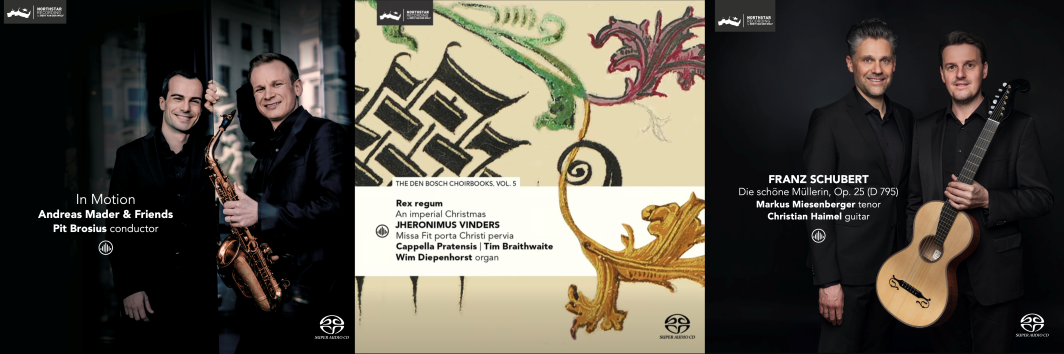
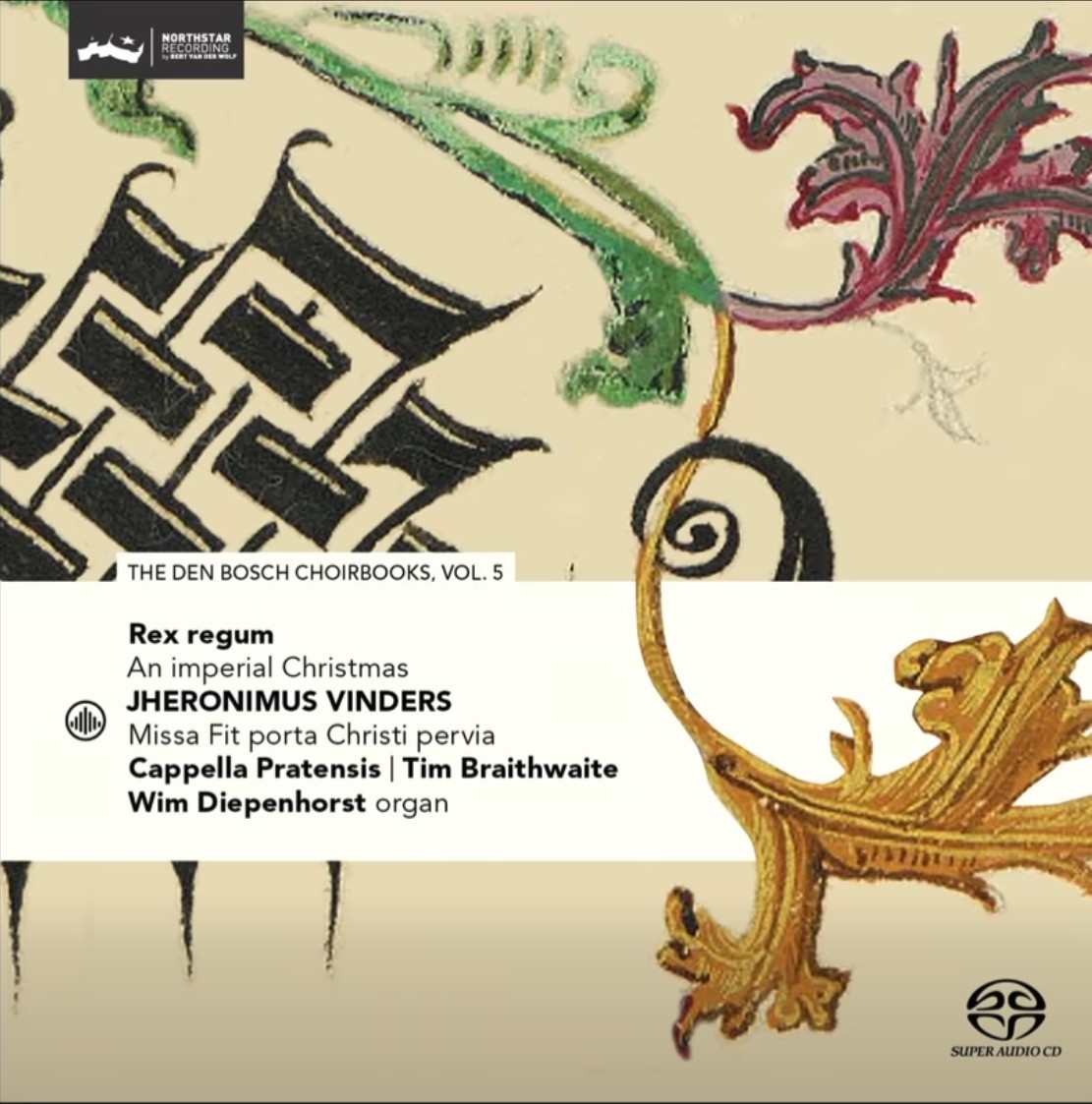
Rex regum—An imperial Christmas—The Den Bosch Choirbooks, Vol. 5, Cappella Pratensis. Northstar Recordings | Challenge Classics, 2026 (DXD, Stereo, MCh, Immersive) HERE
With this fifth volume from The Den Bosch Choirbooks, Cappella Pratensis recreates one of the most remarkable Christmas celebrations of the Renaissance: the festive Mass celebrated in ‘s-Hertogenbosch on Christmas Day 1545, attended by Holy Roman Emperor Charles V during an unexpected stay in the city.
Once again, Cappella Pratensis creates a rich and compelling soundscape with outstanding performances of a cappella polyphony from the 16th-century.
They are joined by organist Wim Diepenhorst for organ interludes on the magnificent Van Straten tracker organ in Amsterdam’s Orgelpark, a precise replica of the 1479 organ from Utrecht's Nicolaïkerk. This organ mirrors the sound of the late Middle Ages — and its very special sound is utterly compelling in this recording.
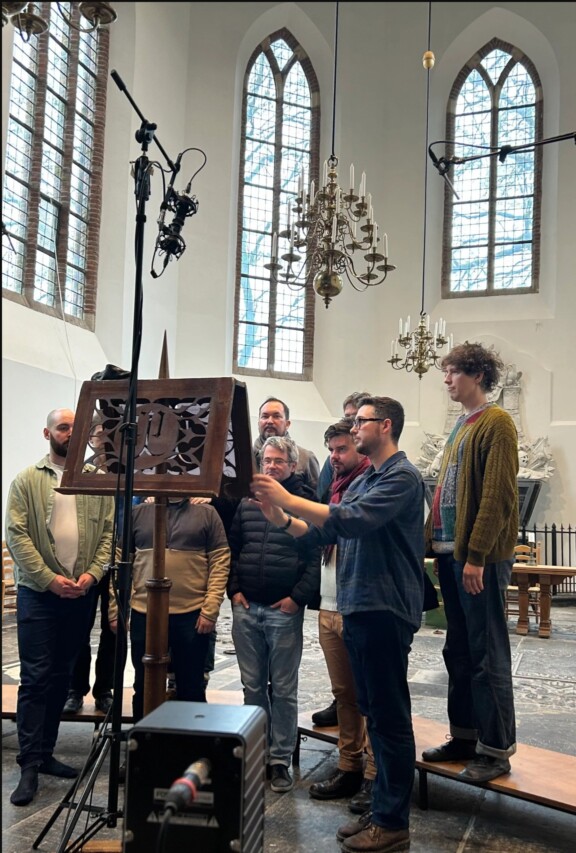
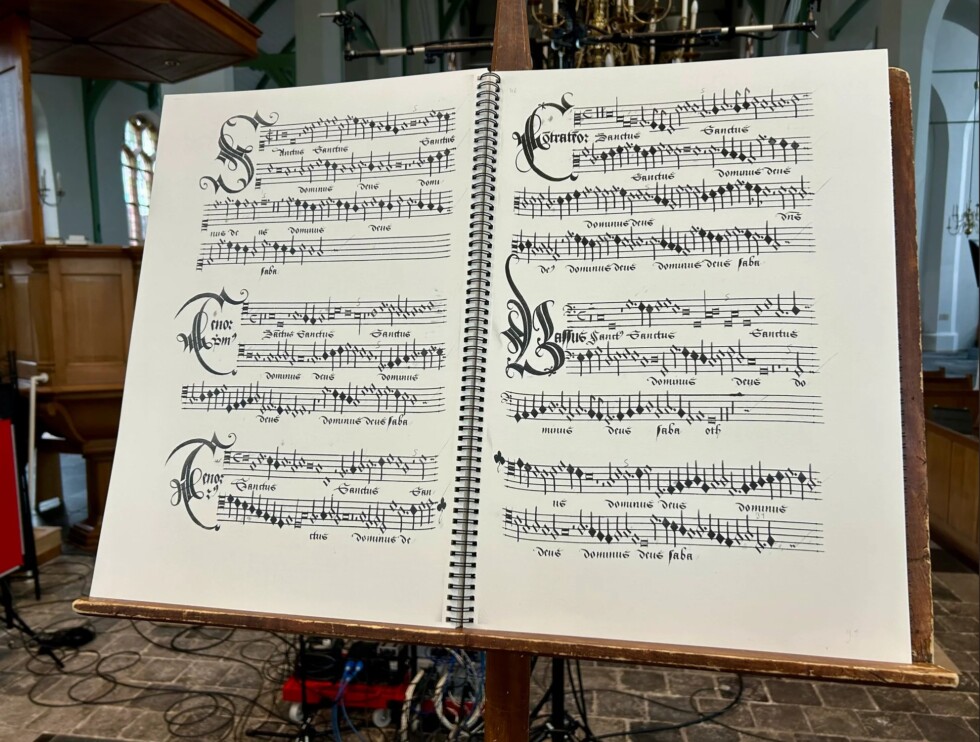
Singing directly from original choirbook notation, the program weaves together plainsong, Renaissance polyphony, traditional Dutch Christmas songs and organ music to evoke the rich soundscape of a sixteenth-century Christmas liturgy. And in doing so, Cappella Pratensis shares music completely new and fresh to my ears.
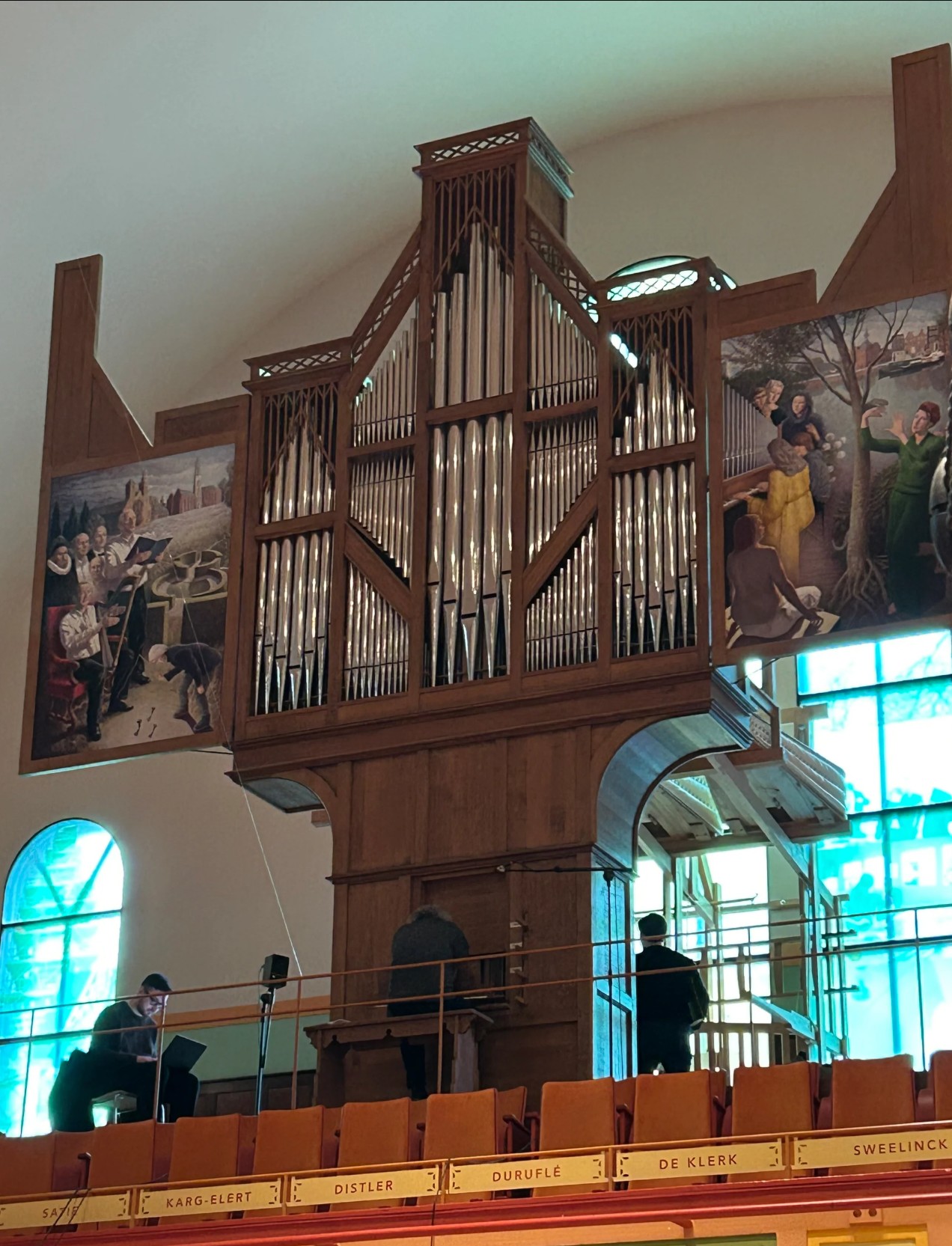
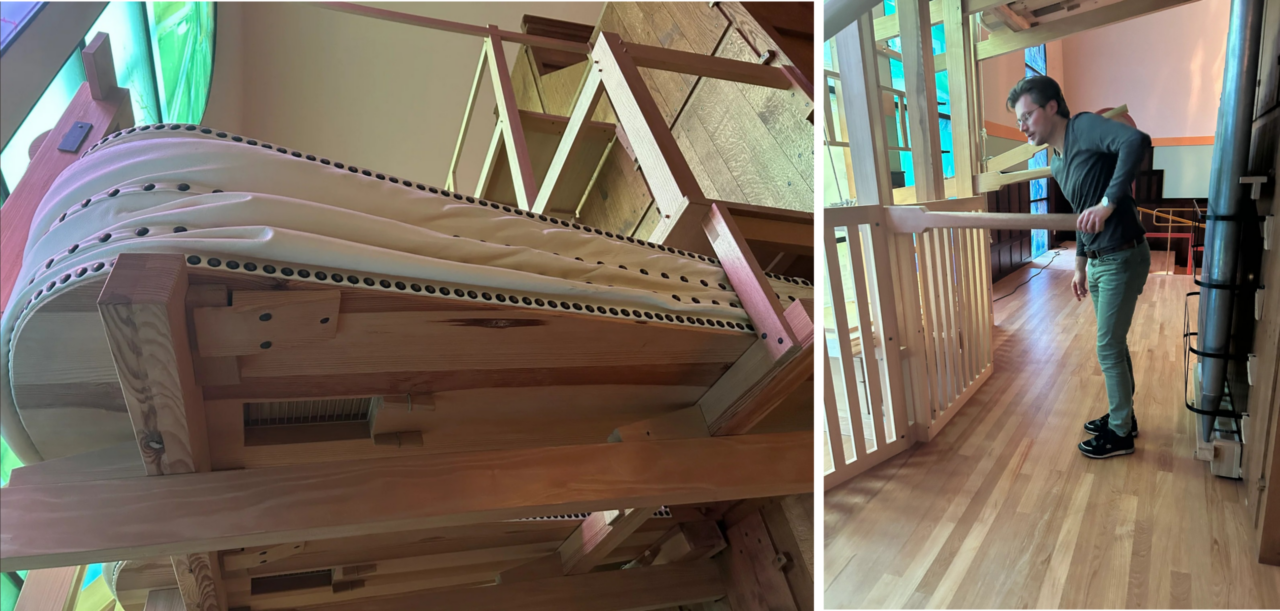
The Van Straten organ in Orgelpark, Amsterdam
Bert van der Wolf captures this performance in some of the most realistically natural sound I've heard from his him. In the group recording session photo above, note the use of the lovely Sonodore microphones, with their capsules set one above the other for a single point of sound capture. The result is exceptionally precise spatial localization and superbly natural sounding ambient capture.
This fifth volume is a vastly rewarding conclusion to Cappella Pratensis' Den Bosch Choirbooks cycle. I offer my highest recommendation for this album — and for any of the earlier volumes. I have them all, and I relish every one of them. Do I have a favorite among them? Oh goodness, no. I couldn't possibly choose.
But this fifth volume has, perhaps, some of Bert's most compelling sound quality with an exceptionally natural presentation of both the voices and the acoustic space. And if you are a fan of the unique timbre of tracker organs, as I am, this album becomes something very special indeed.
Cappella Pratensis has regularly received a Diapason d’Or, the Prix Choc, and three consecutive Gramophone Editor’s Choices for their past releases. This recording is similarly deserving. Well done!
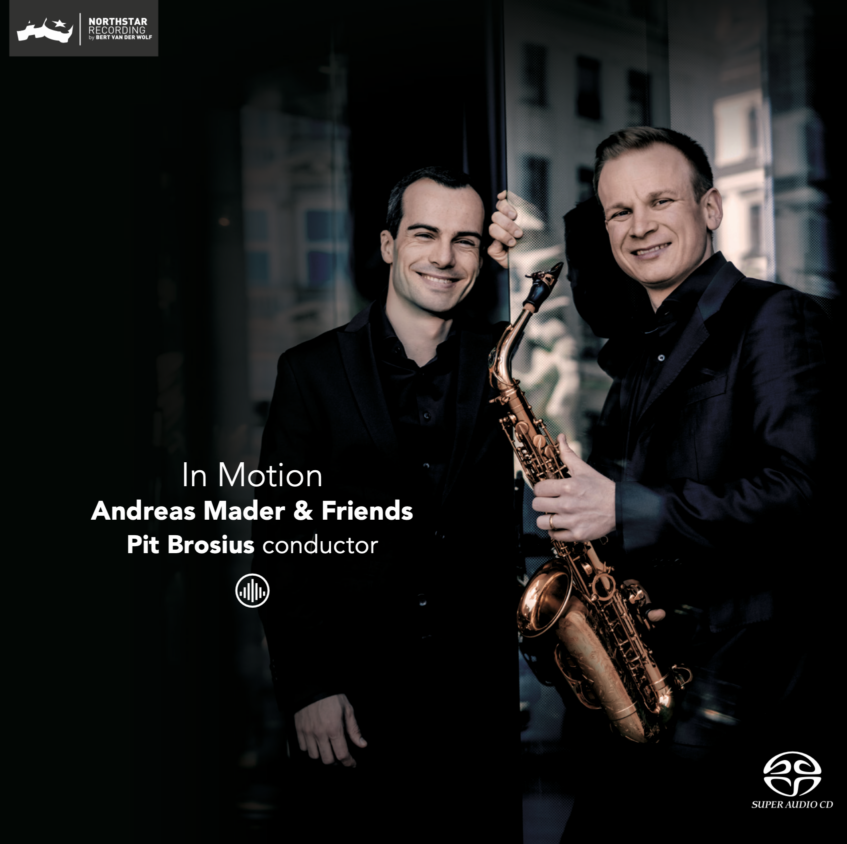
In Motion, Andreas Mader and friends. Northstar Recordings | Challenge Classics, 2026 (DXD, Stereo, MCh, Immersive) HERE
I'm among the unwashed crowd who always think of the saxophone as a jazz instrument. But there is a fairly large repertoire of classical music written for saxophone, and the instrument certainly has its place among the woodwinds of the modern orchestra. Still, I'm regularly surprised by how often I see saxophones featured in European classical music ensembles, including ensembles made up entirely of saxophones (although this recording features a mix of instruments). So be aware of my general lack of awareness when it comes to this highly flexible woodwind made of brass, invented by Adolphe Sax in the 1840s.
The program of In Motion carries us through works originally composed for saxophone or transcribed to include it, beginning with Jacques Ibert's witty, jazzy, and utterly charming Concertino da Camera (1935).
Opening with this work, Mader has chosen a piece full of dance rhythms and rhythmic playfulness. The second movement, "Larghetto," slows to a magical, flowing stream, led by the saxophone, and then final movement, "Animato Molto," takes off in whirling spheres of sound.
This energy continues into Pierre-Max Dubois' Sonatine-Tango (1983) whose opening movement is marked "Violent et animé." And animated it surely is. Lasting just 1 minute and 12 seconds, this opening movement is filled with the rhythms of tango, once again led by the saxophone in an arrangement by ensemble music director Pit Brosius.
But the unifying theme of In Motion isn't the saxophone itself. It's the many ways music captures movement—through rhythm, dance, the passing of time, and the ever-changing colors of sound. This is a vibrant program that reimagines works by Ibert, Villa-Lobos, Ravel, de Falla, Caroline Shaw and Dubois. Andreas Mader, the creative mind behind this program, just happens to be a saxophonist, and a very talented one.
Caroline Shaw (b. 1982) continually fascinates me. In her eight-minute Its Motion Keeps (2013), tick-tock rhythms give rise to a kaleidoscope of subtly shifting colors and dynamics. Originally scored for treble chorus with solo viola or cello, this arrangement for saxophone and small ensemble works very well to my ear. Once again, Shaw has composed a work that fully engages my attention.
Heitor Villa-Lobos (1887-1959) often included saxophone in his scoring, but this three-movement Fantasia of 1948 is his only work featuring the instrument as soloist. Mader switches to soprano sax for this performance. The arrangement adds winds to the original scoring for strings and one horn. I found the result simply delightful—light, airy, and constantly moving, demonstrating the Mader's remarkable facility and deft phrasing.
Ravel's bluesy second movement from his Violin Sonata No. 2, aptly titled "Blues," struck me as eminently suited to this transcription for saxophone, with the expressive “smears” between notes fully exploited by Mader.
The program closes with Falla's distinctive El amor brujo (1915). Here, Mader seems to shift to alto saxophone to exploit brilliantly the menacing quality of the music's low range. While I absolutely adore this work in its full orchestral version, this arrangement for small ensemble captures its soul in a different palette of colors — one I found most intriguing.
Overall, this is for me an engaging, inventive, and fully delightful program of music. Andreas Mader, conductor Pit Brosius, and the ensemble deliver performances full of panache, with excellent ensemble playing throughout.
Bert's recording sounds as true to a live performance as ever, with superb capture of micro-dynamics, instrumental timbre, and the natural acoustic ambiance of the performing hall.
Congratulations to all, and thank you.
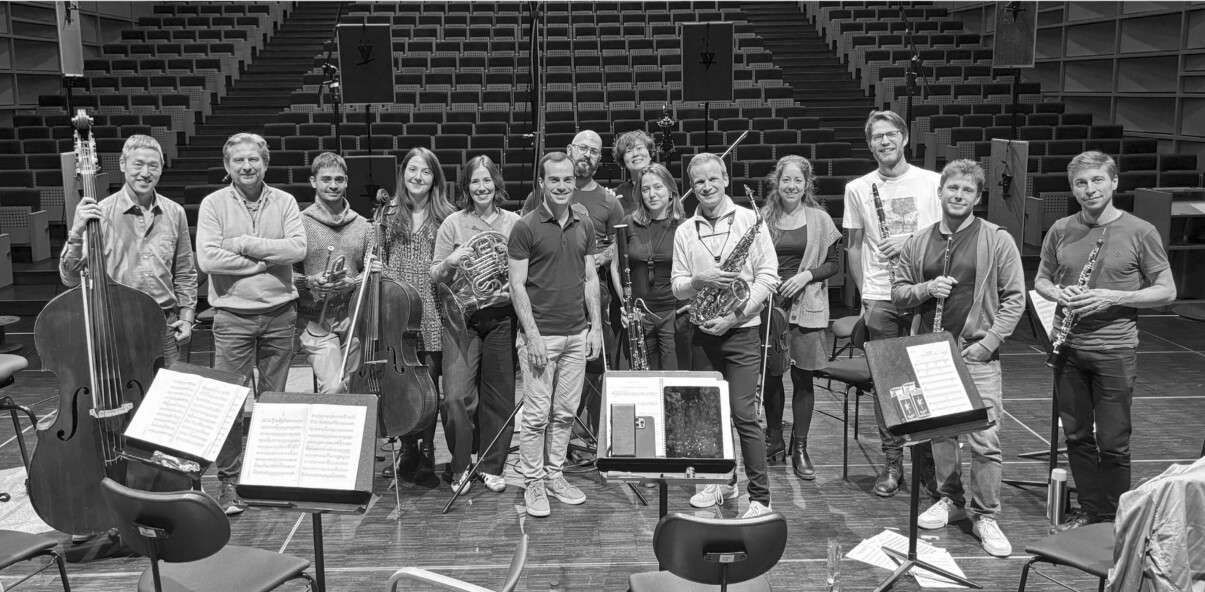
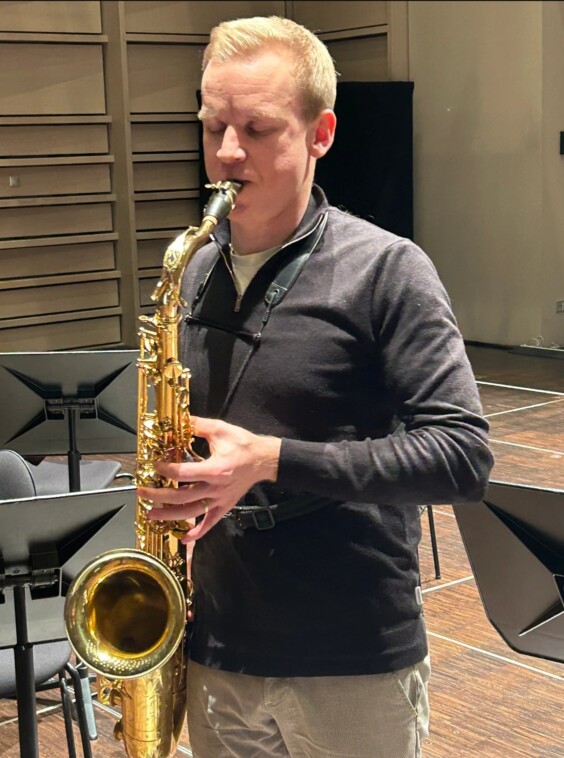
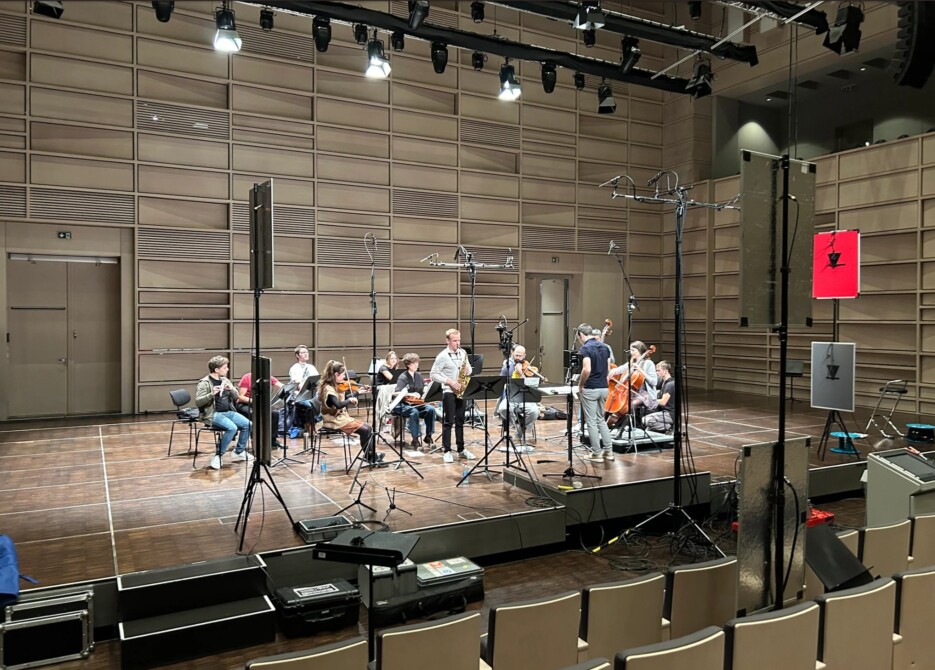
Andreas Mader and friends during recording session for In Motion at Trifolion Echternach, Luxembourg, 4-7 November 2025.
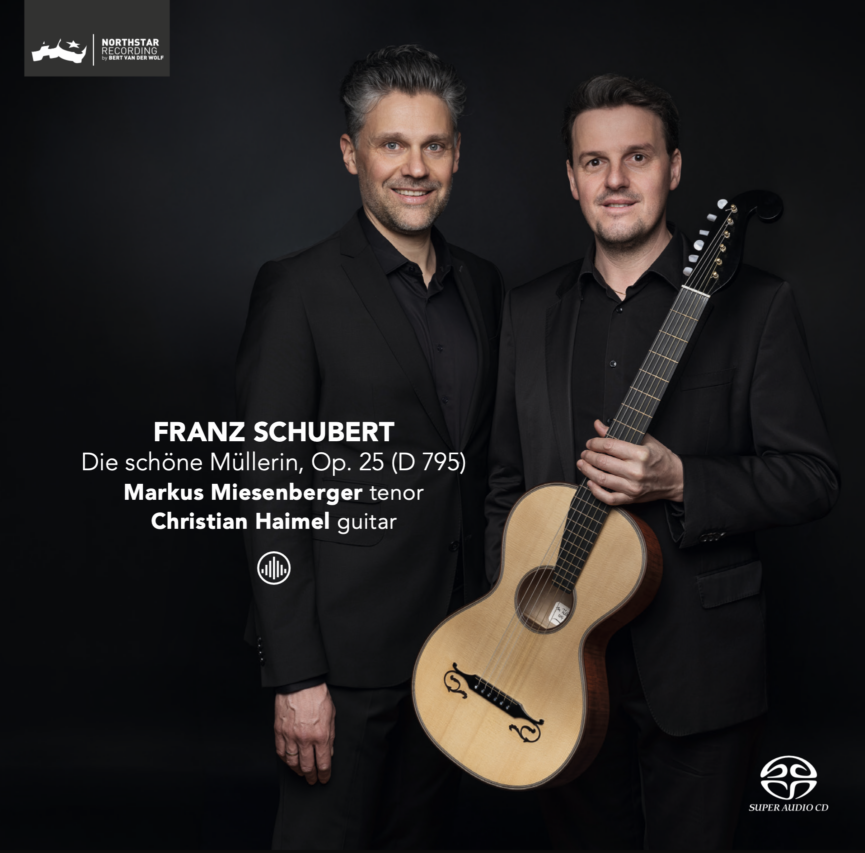
Schubert Die schöne Müllerin, Markus Miesenberger, Christian Haimel. Northstar Recordings | Challenge Classics, 2026 (DXD, Stereo, MCh, Immersive) HERE
Franz Schubert's songs are among the most engaging chamber music to come down to us from the Classical era. Alternately delicate or powerful, but always inventive, his various song cycles continue to attract new itnerpretations. In this album, tenor Markus Miesenberger and guitarist Christian Haimel offer a very likeable traversal of Die schöne Müllerin (The Fair Maid of the Mill).
As Miesenberger asks in the enclosed booklet, just how many new recordings of Die schöne Müllerin can the catalog support? And his answer strikes true to me: new interpretations and new artistic insights will always be welcome for music as delightful as this.
And I find Miesenberger's and Haimel's new recording delightfully fresh and welcome. They begin with a foundation built on the work of giants: the arrangement for guitar and high voice by Konrad Ragossnig and John W. Duarte. But they go on to make it their own. Haimel's gut-strung guitar has that intimate timbre that simply pulls one closer, coupled with superb musicianship. Miesenberger leads their interpretive efforts with delicate phrasing and expressive dynamics that shape each song in the cycle with subtle grace.
Then there is Bert's superb recording quality: utter clarity, realistic timbre, unconstrained dynamics—just a marvel of "you are there" recording craftsmanship. "Dynamics" some may ask? In voice and gut-strung guitar? Oh, yes, indeed. The micro-dynamics throughout this excellent recording are what make it come alive, and what differentiate the truly excellent from the merely good. Well done, all!
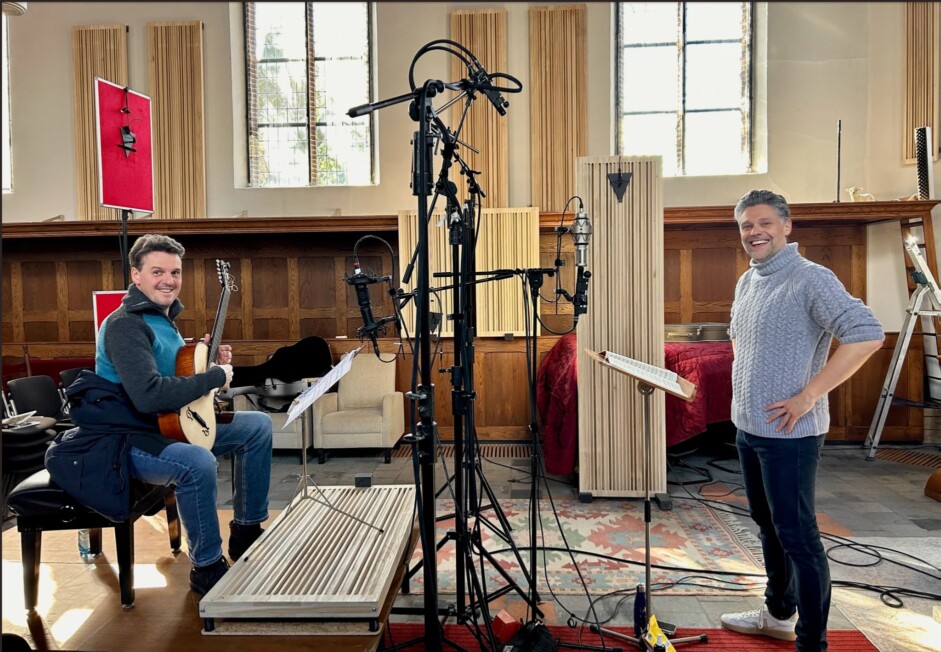
Christian Haimel and Markus Miesenberger, recording session in High Street Studio Heerewaarden, The Netherlands, 27-31 March 2026.
All images Courtesy of Bert van der Wolf and Northstar Recording Services