

Our inimitable editor-in-chief, Dr. David, charged me with focusing on DSD256 and DXD recordings. I mostly follow that brief. And today, I have an abundance of outstanding ultra-high resolution recordings to share: six Pure DSD256 recordings and two DXD 32-bit recordings. Their sound quality gratifies my search over decades for the most discerning playback systems I can afford to assemble. If you share this obsession, I think you will find these releases rewarding. And the music is great. So, join me for a conversation about them...
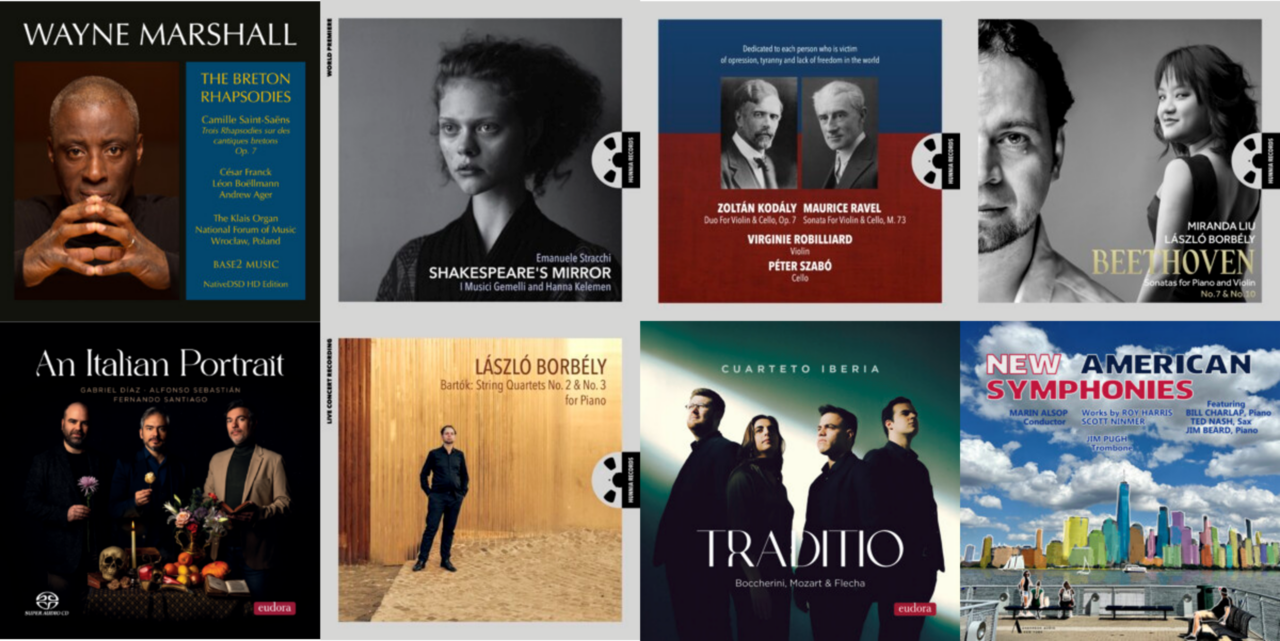
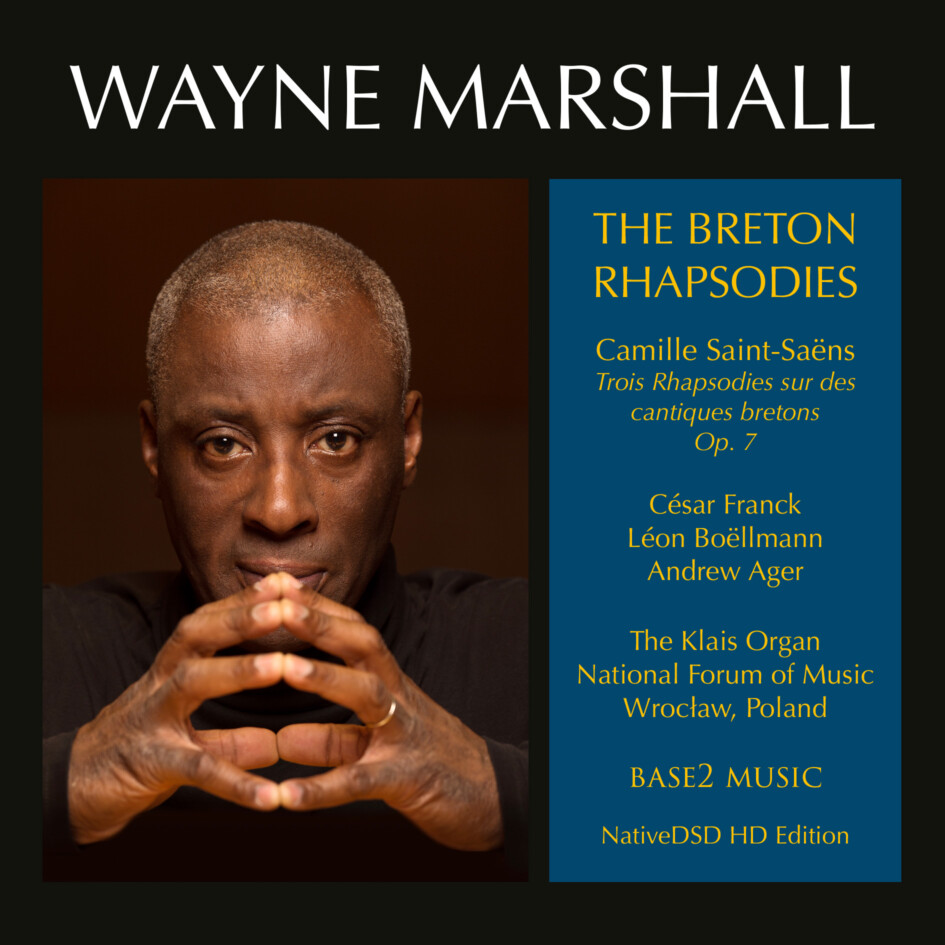
The Breton Rhapsodies (NativeDSD HD Edition), Wayne Marshall. Base2 Music 2026 (DXD 32-bit, DSD256, Stereo, MCh) Edit Master Sourced HERE
I enjoy organ recordings, particularly when the organist is as engaging as Wayne Marshall, OBE ("Officer of the Order of the British Empire") born in Oldham, England, in 1961. And when the recording comes from such capable hands as those of Jake Purches, founder and recording engineer of Base2 Records, I get excited because I have come to expect something truly special. The Breton Rhapsodies is the third collaboration of these two masters of their respective crafts, and it is spectacular. You will find my reviews of their two earlier releases (2020 and 2022) HERE, and I highly recommend those albums as well.
I find Wayne Marshall quite a remarkable artist for several reasons. His choices of registration bring out the best in the organs on which he performs, always unerringly suited to the music. He brings a joy to his playing that is immediately evident and infectious. His improvisations are creative, vibrant, and intellectually stimulating. I just love the too few opportunities I have to hear him make music on the organ. Further, he is a charismatic conductor and a fine composer. A person of many talents? Yes, indeed.
On The Breton Rhapsodies, Marshall assembles a diverse program played on the new Klais organ at the National Forum of Music in Wrocław, Poland, built in 2020. He comments, "In planning the programme, I have sought to select repertoire that best reveals the remarkable range and character of this splendid instrument, situated within one of the quietest concert halls I have ever encountered, allowing for an unusually wide dynamic range. Do not be surprised if certain tracks, such as the Ager or Boëllmann, make you jump!"
The dynamic range is so extended that I found myself waiting until late at night, when all was quiet, to replay this recital. And jump I did when Leon Boëllmann's Suite Gothique exploded from my audio system following the exceptionally quiet close to Franck's Pastorale Op. 19. The power of Boëllmann's opening chords was immense. As the work progressed, I was repeatedly impressed by the contrast between its quiet and commanding passages. It is not often I get to enjoy such extremes in a recording.
As Marshall moved into the dance-like motifs that followed, I found myself simply nodding and moving with the flow of the music. He seemed to have captured the rhythms, contrasts, and shifting moods of this very engaging 13:32 minute work just perfectly.
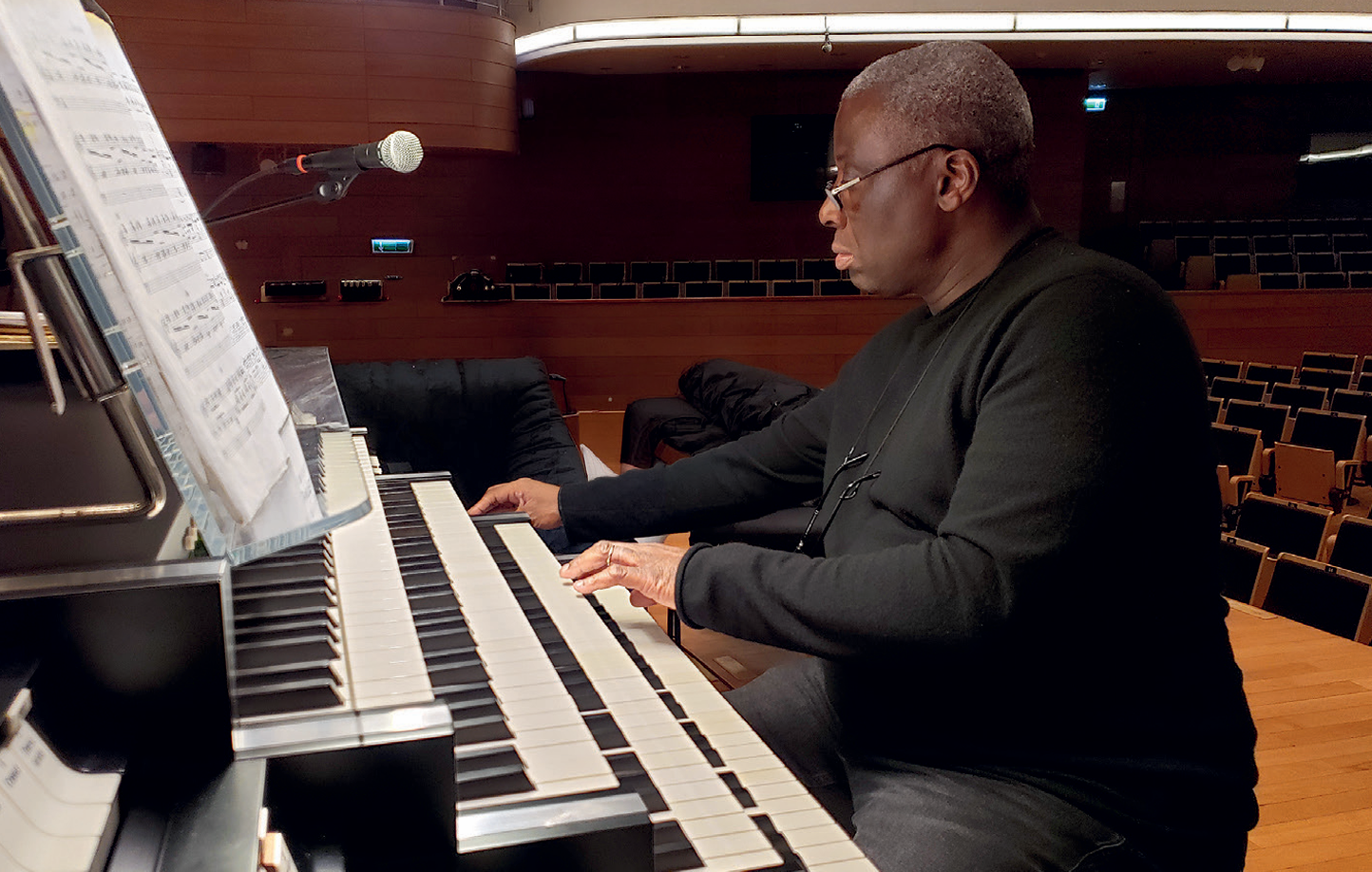
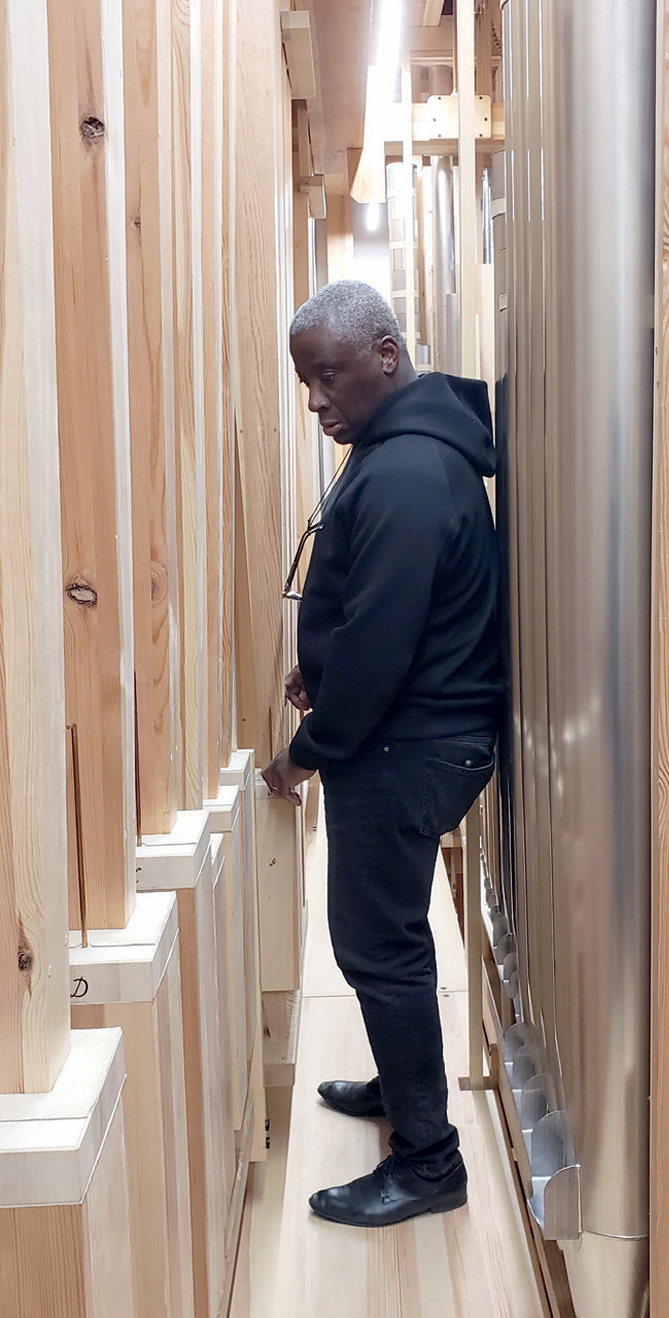
The keyboard and pipes of the Klais organ at the National Forum of Music in Wrocław, Poland
The album closes with a special treat: an exuberant thirteen minute improvisation and variation on Bach's Toccata and Fugue in D minor, BWV 565, recorded separately a week after the main recital on the famous “Hand of God” organ designed by Jean Guillou at L’Église Notre-Dame des Neiges, Alpe d’Huez, France. For me, this one track makes the entire album worth adding to my music library.
I am hopeful that Jake has more music recorded on this famous organ that we will get to hear in a future release. I certainly want to hear more!
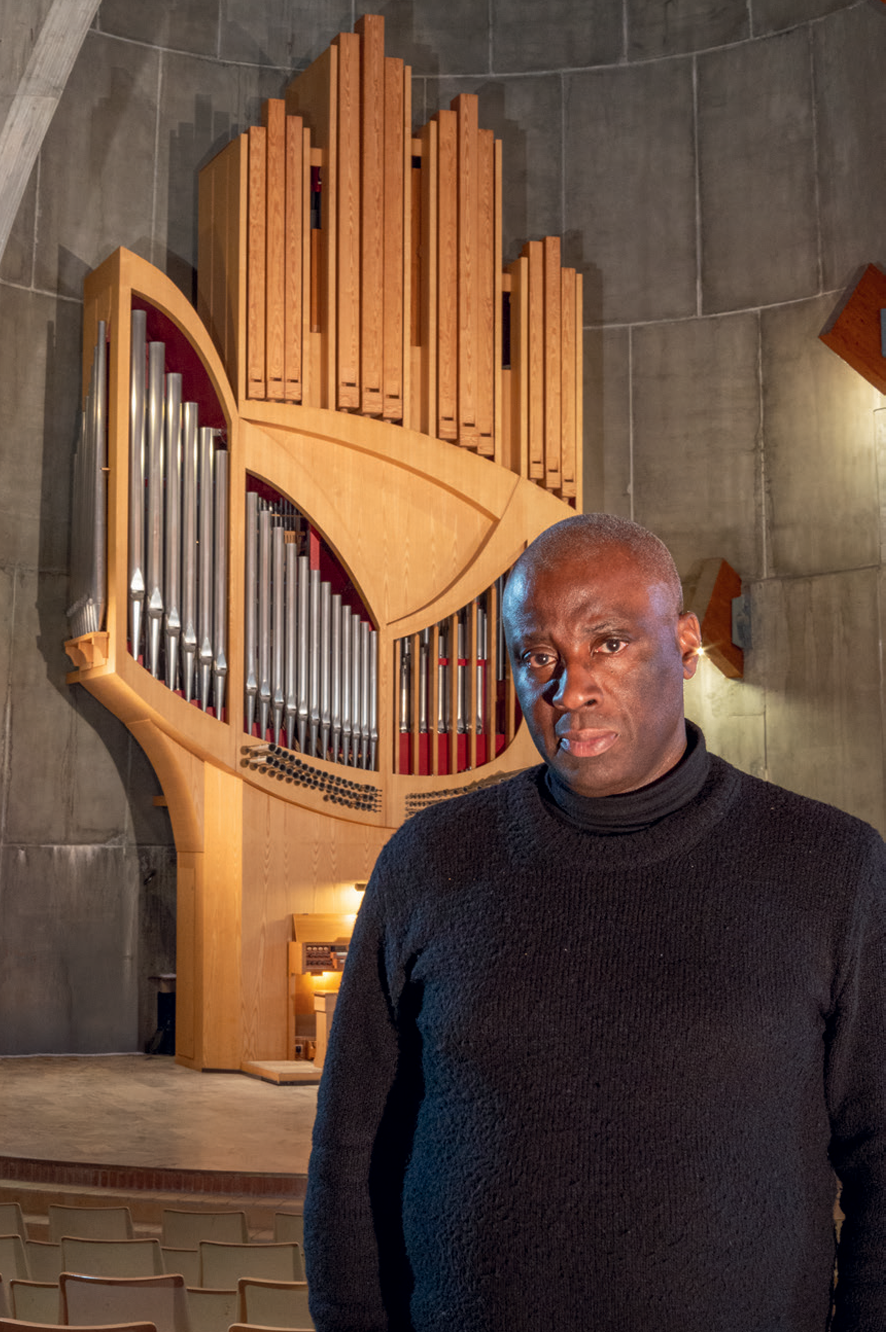
Wayne Marshall – Portrait at L’Église Notre-Dame des Neiges, Alpe d’Huez by Jake Purches
And for a completely unrelated, but wild, improvisation on 'Jingle Bells' by Wayne Marshall OBE that was filmed by Jake Purches at the Muziekgebouw Frits Philips, Eindhoven, during a break from editing his Passion Symphony album, just listen to this (use the link below the image):
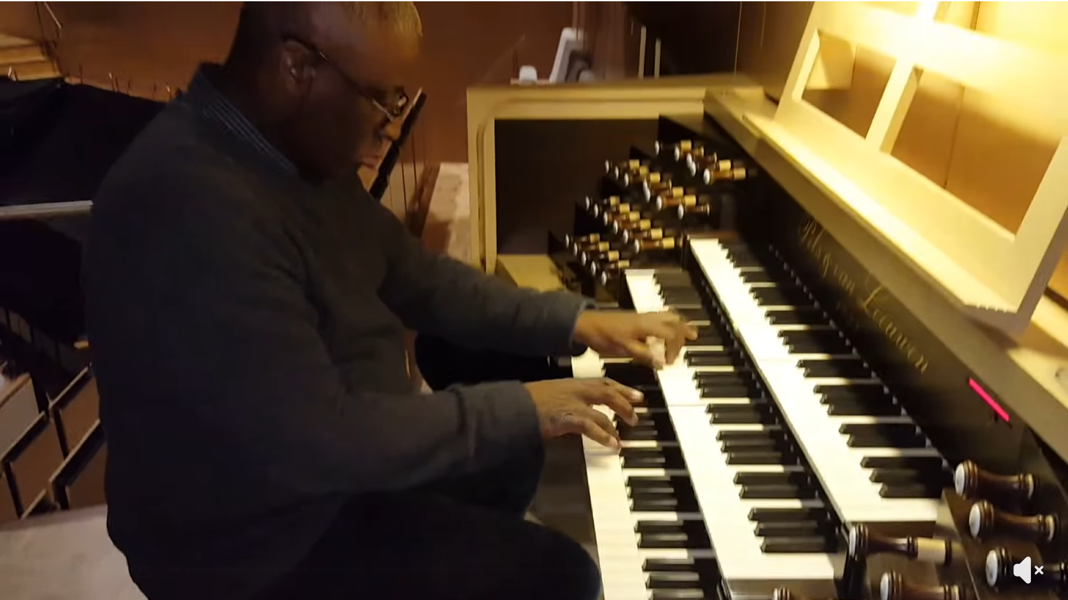
https://www.facebook.com/reel/1761935351503272
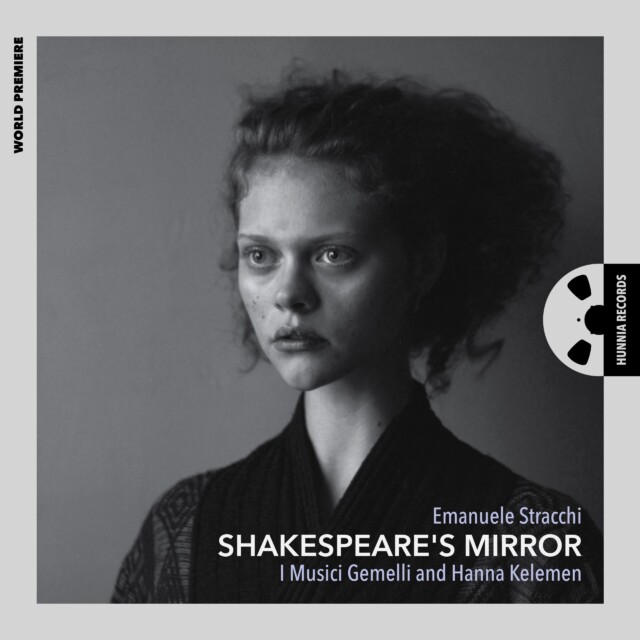
Shakespeare’s Mirror, Hanna Kelemen, I Musici Gemelli. Hunnia Records 2026 (Pure DSD256, Stereo) HERE
I've shared with you several other recordings by the violin duo I Musici Gemelli, all of which I recommend most highly. Today we have a new recording in which they have partnered with Hungarian actress Hanna Kelemen in a very unusual and creative work by composer Emanuele Stracchi.
This recording combines music and theater to bring some of William Shakespeare’s most important works to life in sound. Each track is inspired by one of Shakespeare’s works, bringing the work forward in time as it combines themes, atmospheres, and emotions into a contemporary musical language. Stracchi's musical compositions are interwoven with recited passages, in which the Hanna Kelemen interprets famous monologues and textual fragments taken from Shakespeare’s works.
Composer Stracchi describes the work as follows:
"Shakespeare's Mirror began as a 'theatrical' journey in music, divided into an overture and eight scenes inspired by some of the most intense monologues and dialogues from William Shakespeare's plays: Hamlet, Macbeth, Othello, King Lear, Romeo and Juliet, Antony and Cleopatra, A Midsummer Night's Dream, and The Tempest. The total duration of the work is approximately 40/45 minutes; each scene, lasting between 4 and 6 minutes, stands alone as an autonomous episode, but at the same time is part of a single dramaturgical structure. The order of the pieces can be changed by the performers: the structure is deliberately open, conceived as a collection of scenes that can be rearranged in different narrative perspectives.
"The fundamental starting point is the Overture, conceived as a true introductory symphony to an opera. It synthesizes the main themes of all eight subsequent scenes. The two violins, playing solo, dialogue and almost argue with each other, presenting the thematic material and general character of the entire work in concentrated form. In just a few minutes, the listener is immersed in a sound universe that anticipates tension, lyricism, contrasts, gravity, and lightness: the Overture is intended to be an instrumental introduction and a key to understanding the entire work.
"The central idea of the project is that of the mirror, or rather the speculum: the music does not accompany the text, but reflects it, distorts it, illuminates it from different angles. Like a speculum, it does not return a neutral image, but amplifies the inner cracks, conflicts, and ambiguities of Shakespeare's characters. In this game of refractions, what is said finds an echo, what is left unsaid finds a sound form. The musical structures do not merely describe; sometimes they suggest what does not appear explicitly in the text, creating a constant tension between presence and absence...
"...Two violins and a voice are enough to construct a world, an essential and intense theater, in which love, madness, violence, and destiny are transformed into vibration, gesture, and sound."
The Overture, played by I Musici Gemelli, launches this work – at first gently, then aggressively, astringently, urgently. The violins clash violently, harshly, gratingly, then pull back into harmony, only to clash again as the Overture progresses. Delicate pizzicato on one is complemented by short, stiff bow strokes on the other. Then the music gently drifts into harmonic sympathy toward a unified conclusion.
The Overture is followed by vignettes of spoken word, interspersed with the violins interpreting, commenting on, and highlighting the text. Sometimes gently, lyrically, and lovingly, as in "Romeo and Juliet." More frequently, harshly, with dissonance – tense, clashing, and unresolved – for this is the nature of much of Shakespeare's explorations of human nature.
I Musici Gemelli capture the intention of their musical efforts succinctly:
"The work is complex because each protagonist in Shakespeare's plays represents virtues and vices of the human soul such as jealousy, love, greed, lust, etc. Playing this album was a profound and engaging journey for us. From a technical point of view, it was really complex to reproduce and convey the idea of dramatic effects, which require a technique that goes beyond the classical way of playing. It is necessary to create something new from a musical point of view. It is always complicated to weave a dialogue with only two instruments and make it stand on its own and make complete sense."
This is a most unusual musical journey – and completely engrossing in its complexity and creativity. The playing by I Musici Gemelli is searching, emotionally charged, and filled with portent. As always in their recordings, they play with sublime technique and incredible precision. With each new recording from these twin brothers, I find myself in awe of what they accomplish with just two instruments.
Hanna Kelemen is marvelous. She voices the selected text with perfect enunciation, superb phrasing, and compelling interpretive skills. Each voiced segment is brief, but remarkably well chosen to convey the most intense emotional content and meaning. Kelemen is a pure delight in her ability to deliver this so effectively.
Composer Emanuele Stracchi has created quite a remarkable musical experience ,blending theater and sound. His explanation of what he sought to accomplish is very descriptive – perhaps even predictive – of my listening experience.
Overall, this was an artistic exploration that I was gratified to experience. I was not sure what to expect, but I was so very glad to have committed the time for a dedicated listen to this recording, and then yet another. It is a recording I expect to come back to because there is still so much content, so much complexity, yet to unravel. Two sessions listening all the way through are not sufficient. In another several days, after I've had time to digest this a bit, I'm sure I will be back for a third and a fourth listen.
After all, Shakespeare is not so easily plumbed. And the interpretive art applied here adds yet another significant layer of complexity to sort through.
As always, recording engineer Sándor Árok has given us immense detail and clarity in this Pure DSD256 recording from the Hunnia ProVibe Studio. Is Kelemen's voice a bit too forward in the balance? Hmmm, perhaps. But her presence seems completely unforced and natural. And the front and center placement of her voice in the acoustic envelope supports the drama that she unfolds. The violins of I Music Gemelli are well balanced in the overall mix. The result is a recording in which the technical excellence serves the music, the drama, and the remarkable artistic conception behind it.
Postscript: Yet another few listens to this recording have now passed, and each time I enjoy hearing it. Each time I find some further nuance, a bit more to unpack in the content. And, surprisingly to me, I find the violins less astringent, less intensely dissonant than in my first listens. Go figure.

Hanna Kelemen
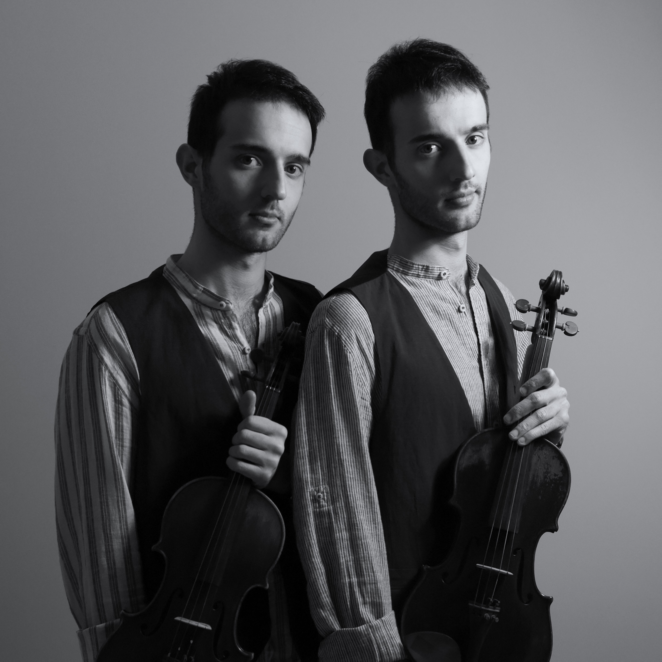
I Musici Gemelli: Francesco Pio Bertozzi and Giuseppe Pio Bertozzi (b. 2000)
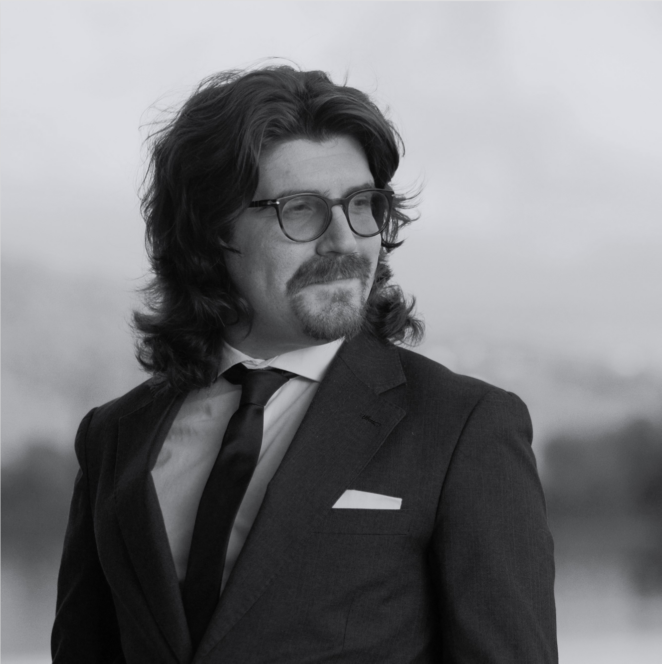
Emanuele Stracchi, composer
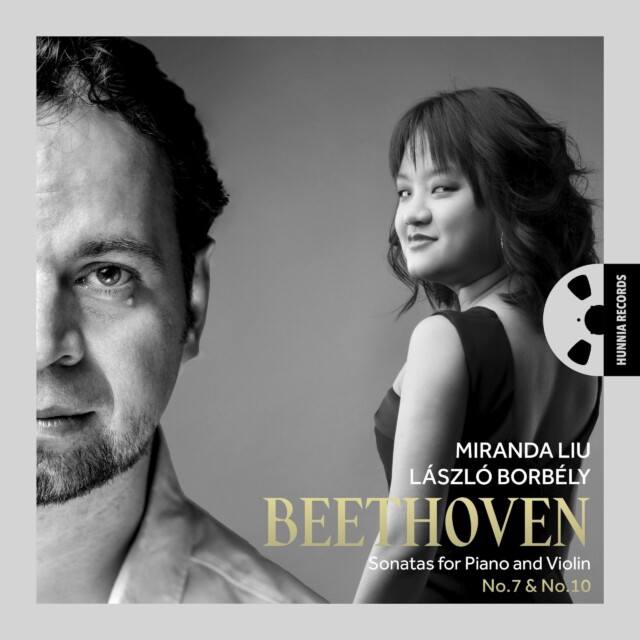
Beethoven Sonatas for Piano and Violin No. 7 & No. 10, Miranda Liu, László Borbély. Hunnia Records 2026 (Pure DSD256, Stereo) Edit Master Sourced HERE
Can I just say that I'm in love with this recording? It is absolutely lovely. Energetic, emotionally communicative, delicate yet powerfully direct. These two artists breathe as one – and complement each other beautifully. There is no fussiness here; it is simply pure music-making for the joy of it. No ego calling out "See what I can do." Just two superb musicians meeting Beethoven at his impossibly demanding best, surmounting the challenges with apparent – and completely misleading – ease, and creating a musical experience that is not exceeded in my listening experience.
In sum, all of my buttons for enjoying of Beethoven's chamber music are amply pushed by these performances.
And the sound quality with which this music has been recorded and presented is superb. Hunnia recording and mastering engineer Sándor Árok has created one of his finest recordings from the Hunnia ProVibe Studio thus far. The sound is immaculate and immediate, with a full, natural resonance that is to die for. The timbre of these two instruments is perfectly captured. I feel as if I'm sitting in the first row, immediately in front of these two outstanding performers.
When the performances are this good, and the sound quality is this extraordinarily special, I just sit with a silly, happy grin on my face. I hope you will listen to this in Pure DSD256 to enjoy this same experience. It is rare, it is delightful, and it is a gift to cherish.
A further note: If you listen at the full DSD256 resolution of this recording – and I hope you will – beware the vast dynamic range. It catches me by surprise from time to time in a way that PCM recordings do not, even at DXD 32-bit. The DSD256 is so clean, so pure, and has such enormous dynamic range, that I have to remind myself to back off the volume control. But it's just violin and piano, isn't it? Yes – precisely. Consider yourself forewarned.
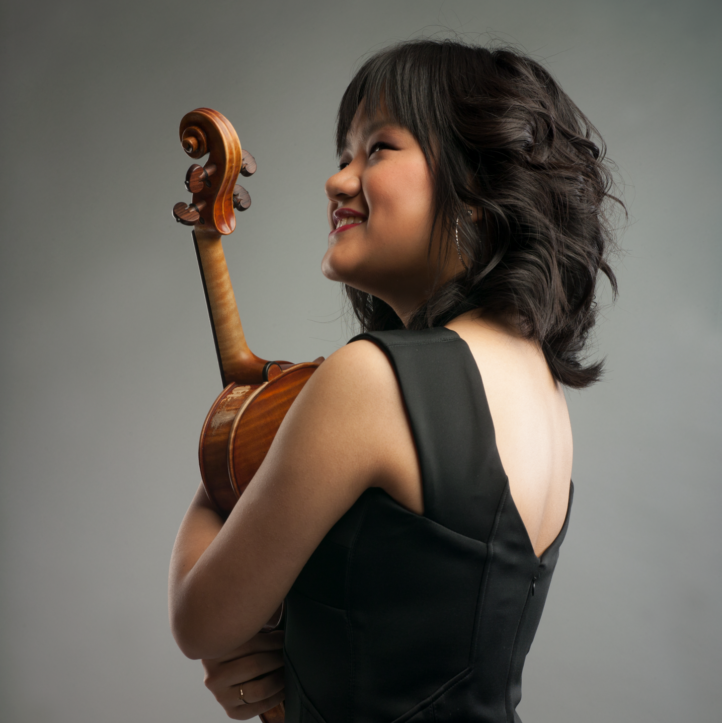
Miranda Liu
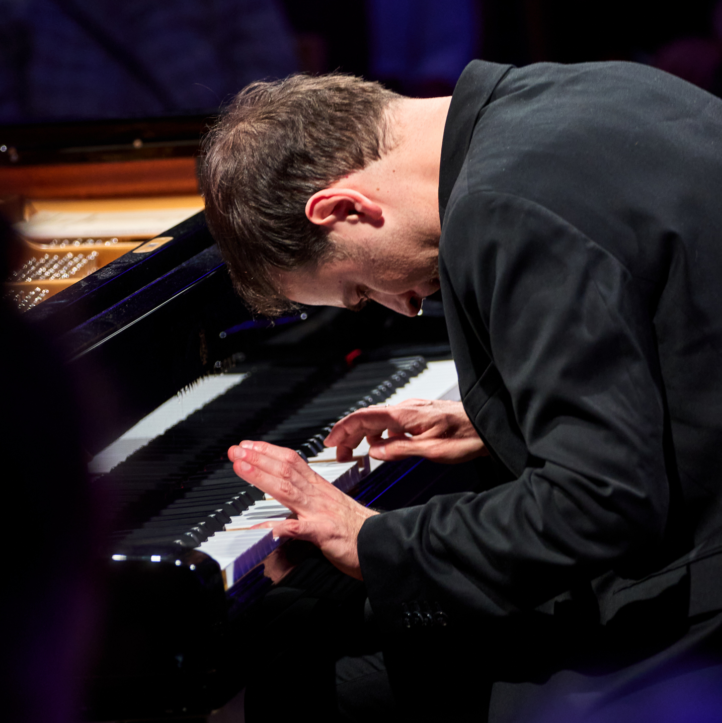
László Borbély
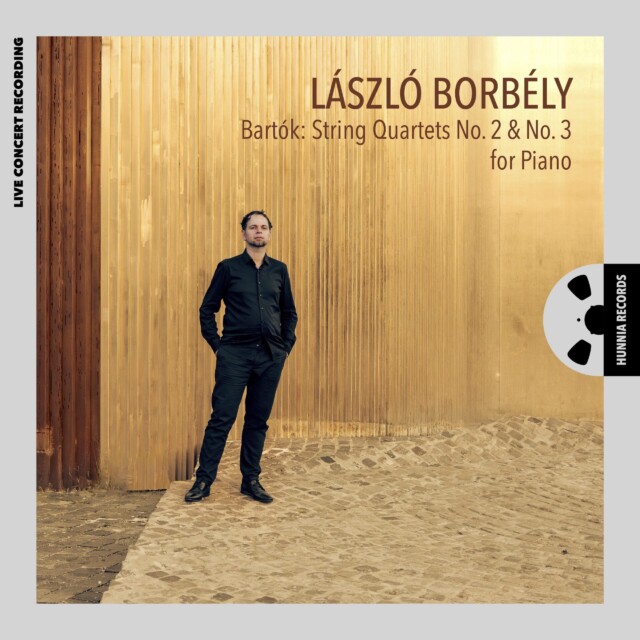
Bartók String Quartets No. 2 and No. 3 for Piano (World Premiere Recording), László Borbély. Hunnia Records 2026 (Pure DSD256, Stereo) Edit Master Sourced HERE
Fascinating. Piano transcriptions of two of Bartók's string quartets. Who would have thought?
Producer and label owner Róbert Zoltán Hunka writes, "The idea for the album came to me on July 18, 2024, during György Kurtág’s master class at the BMC. Kurtág was analyzing and teaching Bartók’s String Quartet No. 2 to the Kelemen Quartet, and as he did so, he demonstrated details of the piece for them on an upright piano. Immediately after the master class ended, I called László Borbély to ask if he would be interested in recording an album of Bartók string quartets arranged for solo piano. And he said yes."
So Hunka and Borbély contacted two musician-composers about the project, and each agreed to create one of the transcriptions. Quartet violist Péter Tornyai has performed Bartók’s String Quartet No. 2 on numerous occasions. Marcell Dargay lives in the same house where Bartók once lived. And László Borbély, in addition to regularly performing his works, teaches at the Liszt Ferenc Academy of Music in the very same room where Béla Bartók once taught. So, we have three artists involved in this project, each with a distinct connection to the composer.
For me, it has been an intriguing listening opportunity to hear these works in such a different context. Listening to them opened some new and different understandings of the original works. But, overall, they were compellingly unique works all unto themselves. I found myself listening to music of Bartók, not transcriptions. And there is a difference.
So often when I listen to transcriptions, I miss hearing the original works – often something seems missing. Not here. Here I simply hear the music: original, distinctive, engaging, challenging. Perhaps it is because I don't have a ready memory of the string quartets that I can easily recall. And so this is my limitation. But this in no way diminishes my complete enjoyment of these performances and this music.
I say, yes, just give me more Bartók – and these certainly deliver.
Once again László Borbély delivers dazzling performances demonstrating tremendous technical assurance, but, more importantly, communicating the soul and intellect so important to Bartók's music.
Highly recommended.
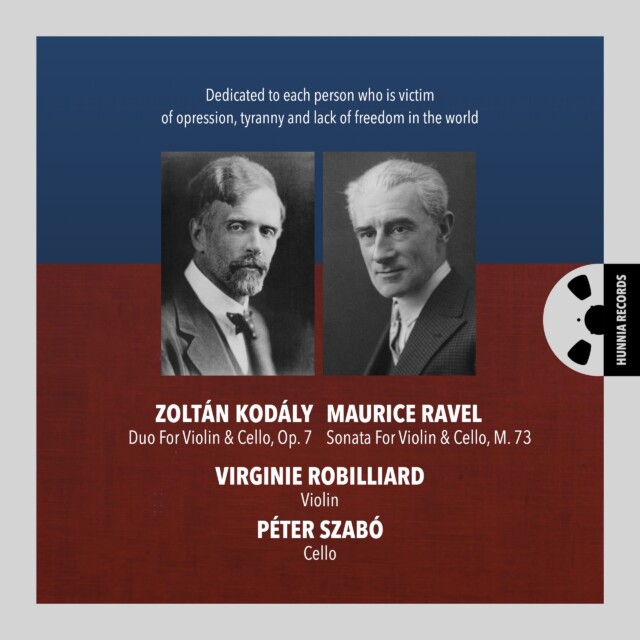
Kodály Duo for Violin and Cello, Op. 7, Ravel Sonata for Violin and Cello, M 73, Péter Szabó, Virginie Robilliard. Hunnia Records 2026 (Pure DSD256, Stereo) Edit Master Sourced HERE
The Kodály Duo for Violin and Cello (1914) is among my favorite works of chamber music. I've loved it since I first heard it performed by Arturo Delmoni and Nathaniel Rosen on the outstanding – and irreplaceable – CD Music for a Glass Bead Game (John Marks Records, 1997), where it is delightfully combined with music of Bach, Martinů, Giordani, and Handel.
And while that Delmoni-Rosen album continues as my touchstone, this new recording of Duo for Violin and Cello with Péter Szabó and Virginie Robilliard may well supplant it. (Pace, John.) Robilliard and Szabó perform with all the emotional energy and technical perfection that the work demands. Their pacing, ensemble, exchange of motifs, and echoes of each other are as near perfect as I've heard in any recording of this work. In short, they capture my vision of the essence of this work to "T."
For those who may not yet know this music, I highly recommend it to you. It is one of the outstanding works of 20th-century chamber music. The two instruments play as equals in the dense texture of this demanding music, filled with double stops, pizzicatos, distinctive rhythms, and extended playing techniques. Kodály builds an exceptionally rich sonic world. Yet for all the density of the music, there is an intensity of dialog that remains taut throughout.
As described in the enclosed booklet:
"The work’s three movements are built on a constant interplay of tension, lyricism, and rhythmic energy. Folk music influences do not appear in the form of quotations, but rather in modes, asymmetrical rhythms, and distinctive melodic turns, organically integrated into Kodály’s musical language. The devastating image of war is particularly palpable in the second movement: a harrowing musical imprint of human suffering, hopelessness, and cruelty. At the same time, the work as a whole is also permeated by creative energy: the dance rhythms and folklore-inspired melodies evoke the power of life, human dignity, and community."
And when combined with the excellence of the recording made in the Béla Bartók Unitarian Church in Budapest (2-4 July, 2025) by engineer Sándor Árok, it is a recording I will treasure for both its musical values and its exceptional sonic experience. There is a spaciousness and natural acoustic resonance in the larger recording environment of this church that cannot be produced in the studio. This acoustic benefit is evident to me every time I listen to one of Árok's "on location" recordings.
And forgive me, but I've not even mentioned the Maurice Ravel Sonata for Violin and Cello (1922), the accompanying work on this recording. And I don't mean to slight it, for it is a very engaging work that contains clear intimations of Kodály, Bartók, and Hungarian folk music. Ravel's command of pungent dissonances is every bit as secure as Kodály's. But somehow I don't find an immediate resonance with this duo as I do with Kodály's. I can't explain this; I can only observe it, for this is truly quite a remarkable work.
It, too, depends entirely on the dialog between violin and cello, both treated as equals throughout. It is spare and demanding. It creates a musical landscape that is complex, compelling, and sonically rich – but without any kind of sentimentality.
Violinist Virginie Robillard writes:
"The writing of this work moves me through its boldness, unfolding a dissonant and resolutely modern language. If one listens, for example, to the central section of the third movement or the final page of the fourth, one might almost doubt that Ravel was its composer. The dialogue between the two instruments collides, falters, and sustains a constant tension – like a disagreement never entirely resolved.
"This sonata, like Kodály’s Duo, conveys a direct discourse, without concession or artifice. It seeks neither to please nor to seduce; it embraces shadow, roughness, and distortion – and perhaps therein lies its singular strength."
A very cogent assessment. One with which I completely concur.
All together, this is an excellent recording. Music that stands in the top ranks of 20th-century chamber works. Performing artists who are superb in both their technical abilities and communicative skills. A recording of a quality that is among the best one can hope to hear.
Simply said, I need this in my music library, and will return to it many times. I encourage you to take the time to hear it.
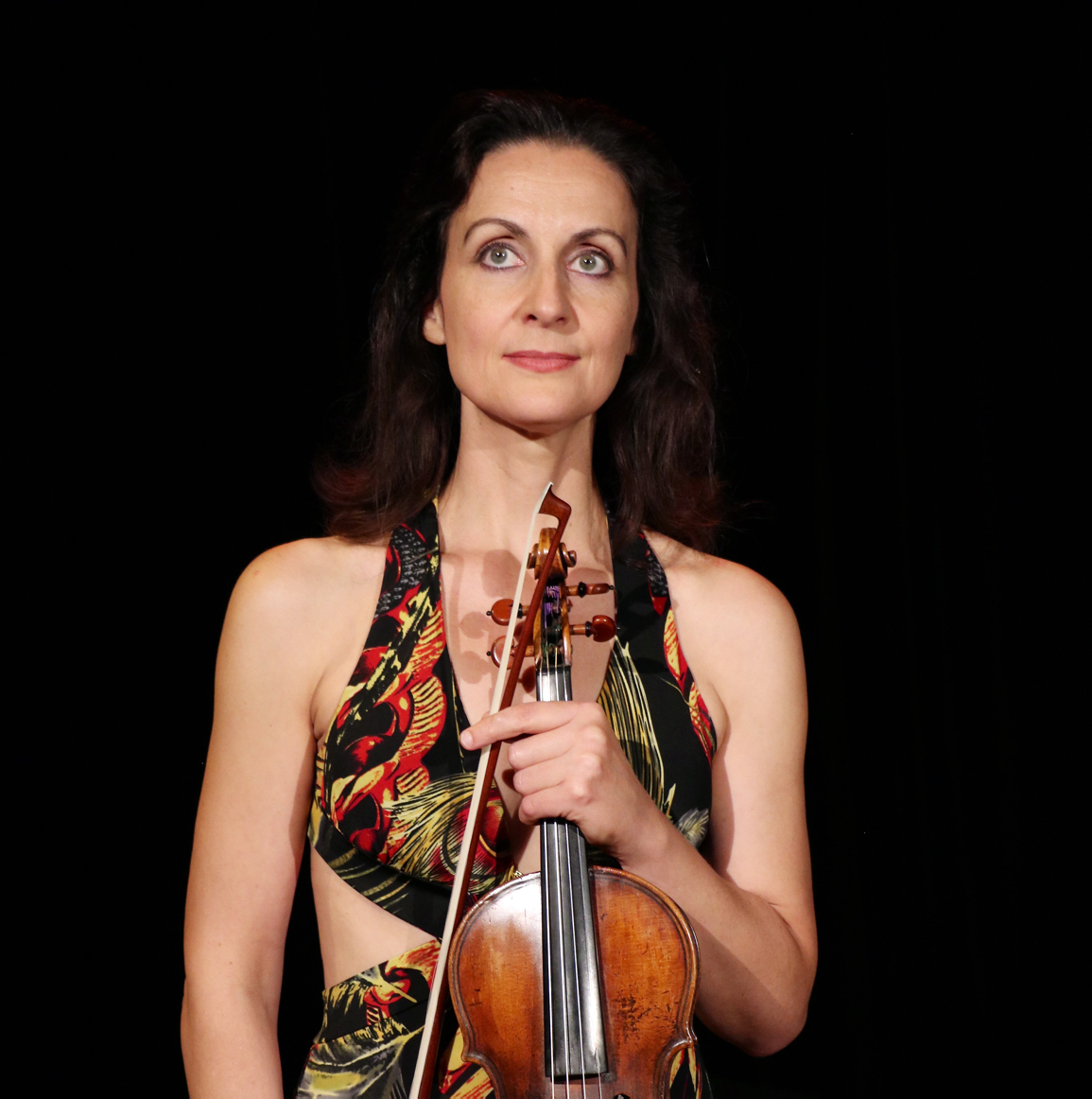
Virginie Robilliard comes from a family of musicians and gave her first public concert at the age of five. At seventeen, she was awarded first prize by the Conservatoire National Supérieur de Musique de Lyon as a pupil of Jacques Ghestem, and she graduated from the Juilliard School in 1993 as a full-scholarship student of Dorothy DeLay.
A laureate at seventeen at the Long-Thibaud International Violin Competition and at the 1990 Indianapolis International Violin Competition, she has performed as a soloist with orchestras including the Saint Petersburg Philharmonic, the French Radio Philharmonic, the Simón Bolívar Symphony Orchestra, the Indianapolis Symphony Orchestra, the Oradea State Symphony Orchestra, and the Bogotá Philharmonic Orchestra, among others, with Yuri Temirkanov, Sergiu Comissiona, Raymond Leppard, Yutaka Sado, Michel Plasson, Pierre Dervaux, Eduardo Diazmuñoz, Fabio Mechetti, Zsolt Jankó, and others.
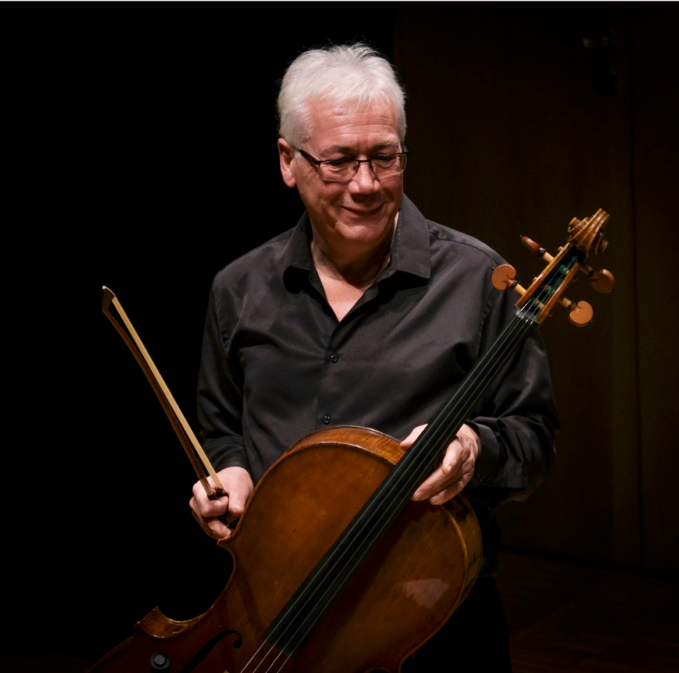
Péter Szabó is one of the most versatile Hungarian cellists of our time. During his international career, his artistry has been widely acclaimed by leading publications such as Fono Forum, The Times of London, Repertoire, Classica, and The Strad. In 2002, he received the Hungarian Classical Award of Gramophone magazine. He was awarded the Franz Liszt Prize in 2011 and the László Lajtha Prize in 2014. In 2024, he was honored with one of Hungary’s highest state decorations, the Knight's Cross of the Hungarian Order of Merit.
Throughout his career, he has performed in more than 40 countries around the world, at the most famous concert halls, including Wigmore Hall in London, the Musikverein and Konzerthaus in Vienna, the Mozarteum in Salzburg, the Tonhalle in Zurich, the Konzerthaus in Berlin, the National Theatre of Venezuela in Caracas, and Avery Fisher Hall at Lincoln Center in New York.
Together with Gábor Takács-Nagy and Dénes Várjon, he founded the Takács Piano Trio, which has resulted in numerous concert tours and CD recordings.
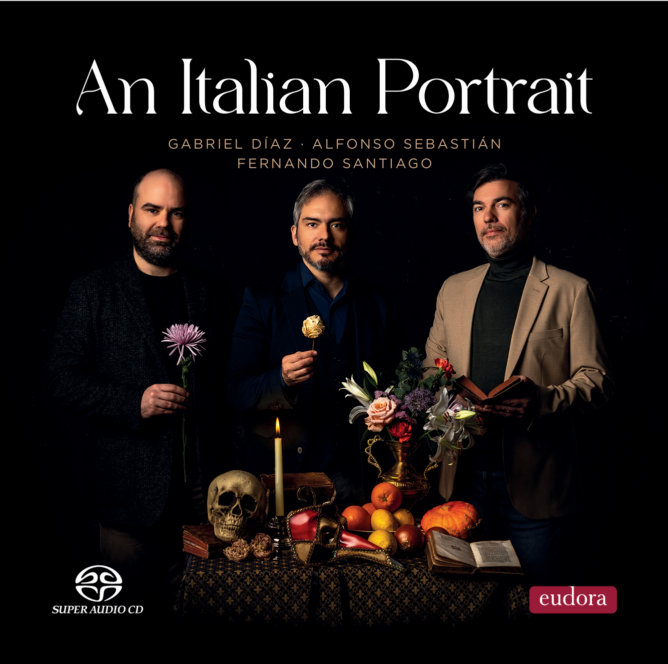
An Italian Portrait, Gabriel Díaz (countertenor), Alfonso Sebastián (harpsichord), Fernando Santiago (baroque cello). Eudora Records 2026 (Pure DSD256, Stereo, MCh) Edit Master Sourced HERE
I assume that most classical music listeners, perhaps most listeners generally, have at least a passing awareness of Handel's oratorios – those large works for orchestra, multiple vocal soloists, and a powerful multi-part chorus. After all, most people know about The Messiah, right? But how many are familiar with Handel's miniatures, his chamber cantatas?
These are the works that have always intrigued me.
Oratorios were written after Handel moved to England. They are sung in English and draw grand dramatic plots from Old Testament biblical narratives or heroic Christian history for theater-going London audiences. Featuring grand French-style overtures, complex character interactions via recitative, virtuosic solo arias, and monumental, driving choral counterpoint, these are grand works with intense drama and emotional content. I love them.
Cantatas, on the other hand, are intimate, chamber-scale secular works for solo voice and basso continuo, written mostly in Italian during his early years in Italy. Set to Italian poetry focusing on pastoral love, unrequited passion, or classical mythology, these are meant for private palazzo concerts. They are works of intimacy. Commonly under 10-minutes long, they are polished, refined, and elegant gems – often quite exquisite.
In this recording we have five chamber cantatas, each speaking to some aspect of secular love, most often with deeply felt emotional distress. They can be sung by men or by women, with either equally at home in the expression of the emotions at the heart of these works. Here they are sung, most compellingly, by countertenor Gabriel Díaz,
In the opening cantata, Irene, idolo mio, HWV 120b, was composed in England sometime after 1710, when Handel had moved there. The vocalist sings of unrequited love and romantic anguish, the text centering on a suffering, miserable lover who laments the cruelty and cold indifference of his beloved Irene.
The next, Clori, degli occhi miei, HWV 91a, composed in Florence around 1707, is another secular love lament, focusing on unrequited and agonizing passion. The speaker addresses the titular beloved, Clori, as the ruler of his eyes, heart, and deepest emotional torment.
This is followed by Stanco di più soffrire, HWV 167a, composed sometime between 1707 and 1708 during Handel's formative years in Italy. It is yet another lament about unrequited love, but now with emotional exhaustion added to the anguish. The speaker is weary from suffering a thousand cruel torments around the heart; dreams of the beloved briefly rekindle the inner fire of passion.
And then there is Lungi da me, pensier tiranno, HWV 125b, ("Away from me, tyrannous thought!"), which captures the speaker's emotional distress and longing while separated from a beloved. Notably, the cantata uses the masculine form caro rather than cara, indicating that the narrator's passionate longing is addressed to a male beloved. It, too, was composed in England sometime after 1710.
Dolc’è pur d’amor l’affanno, HWV 109a, composed in London around 1717–1718, closes the album with a text about the sweet torment and paradoxical nature of love. The title and opening text translate roughly as "Yet love's distress is sweet," and the cantata explores how heartbreak, longing, and romantic pain can ultimately yield a deeper emotional reward or delight when mixed with hope.
Countertenor Gabriel Díaz brings these cantatas to life with polish, highly communicative phrasing, and beautiful intonation. He is also the author of the liner notes, which present an interesting discussion of conceptions of gender and gender-specific love in Handel's era, particularly during his formative years traveling throughout Italy. For me, whether the text is sung by a man or a woman is immaterial. The emotional content works for me in either direction. And Díaz's well-trained voice is simply a joy to hear.
Alfonso Sebastián and Fernando Santiago, on harpsichord and baroque cello respectively, provide beautifully performed accompaniment. Alert, expressive, and well balanced, they make the performances come alive as a unified whole. This is not a recording of three independent performers; it is a carefully crafted mind-meld of artists who are fully in tune with one another and making some very excellent music.
Eudora Records founder and recording engineer Gonzalo Noqué has completely spoiled me over the years with the excellence of his recordings. I have come to expect from him recordings of great merit. And once again, he has delivered a recording that is beautifully balanced and detailed.
Recorded in the Iglesia de San Miguel, Daroca, Zaragoza, Spain, the sound Gonzalo has captured has that very natural acoustic signature I've come to anticipate – open and spacious, with a natural acoustic resonance in which the harmonic overtones are allowed to fully develop and bloom. It is a quality I treasure in recordings.
If you enjoy the music of Handel but have not yet explored his chamber cantatas, this would be an excellent point of departure. If you already know and enjoy Handel's cantatas, I believe that, like me, you will highly welcome this new recording.
One final comment: I don't speak, read, or understand Italian. But my enjoyment of this album is completely independent of understanding the words. The emotional content comes through very clearly, and it is deeply satisfying without requiring me to divert my attention to reading an English translation of the texts – which is not included with the album, but is readily available online.
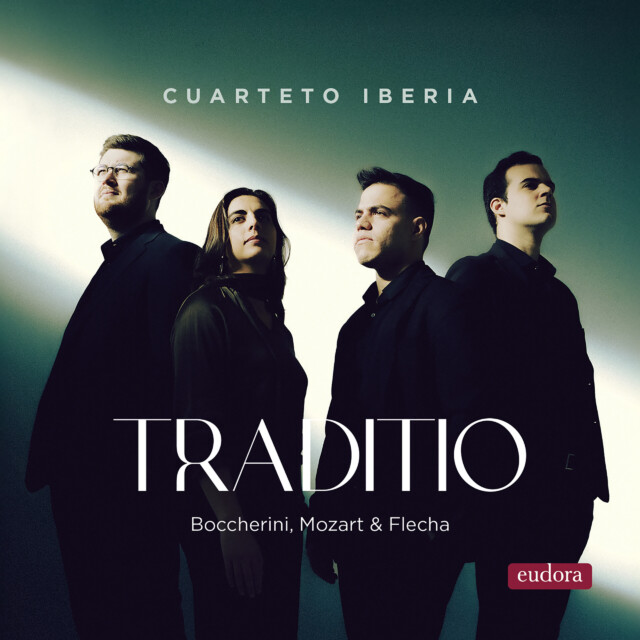
Traditio (music of Boccherini, Mozart, Flecha), Cuarteto Iberia. Eudora Records 2026 (Pure DSD256, Stereo, MCh) Edit Master Sourced HERE
I enjoy albums that have a story to tell, a message to convey, some learning that goes beyond the notes played. Rather than a collection of unrelated works, I relish a thoughtful selection that teaches me something new about the world, opens my thoughts to a new experience, or offers a fresh creative conception.
Traditio, the new recording by Cuarteto Iberia, does exactly this – and does it exceptionally well.
The quartet's concept is built around the Latin word traditio, meaning an act of handing something over, of transmitting it from one generation to the next. But for Cuarteto Iberia, tradition is not preservation. It is not a static archive of works that have somehow been frozen in time. It is an active process in which music is continually reinterpreted and brought back into the present through performance.
That idea gives Traditio its substance. The individual works are lovely, and lovingly performed. But it is the exploration of how tradition takes shape, transforms itself, and is transmitted across different historical moments that gives this album meaning beyond the individual compositions.
The program is not chronological, and there is no obvious musical lineage being laid out for us. Instead, Cuarteto Iberia has selected three composers and four works as different points of entry into the same idea. As the quartet explains, "the score is a point of departure, not a closed object." Every decision about articulation, tempo, dynamics, and color becomes part of a continuing dialogue between the original text and the performers bringing it to life today.
That is tradition in action.
The album opens with Luigi Boccherini, whose contribution to the development of the string quartet is foundational. His Quartettino in G major, Op. 44, No. 4, G. 230, known as La Tiranna, is deeply connected to the cultural identity of Madrid, where Boccherini spent much of his career. Cuarteto Iberia describes the work as bringing together "the formal elegance of classicism and the vitality of popular elements that are part of the Spanish cultural imagination."
Here, then, is one form of transmission: a composer absorbing the musical and cultural world around him and incorporating it into a developing classical form.
Mozart provides another touchstone. His String Quartet No. 14 in G major, K. 387, the "Spring" Quartet, is the first of the six quartets he dedicated to Haydn and represents one of the great foundations of the mature classical string quartet. Here the tradition is less geographical and more structural. Mozart's music embodies the architecture of the quartet – the balance between voices, the tension and release, the conversational interplay, and the formal construction that would define the genre.
For Cuarteto Iberia, Mozart is "not merely a historical touchstone, but an aesthetic guide." And in this context, that distinction matters. Tradition is not simply something inherited; it is something understood, absorbed, and carried forward.
Then the album reaches much farther back, to Mateo Flecha "El Viejo" (1481–1553), the Spanish composer whose La Negrina provides perhaps the most striking example of the quartet's concept. Arnold Rodríguez, cellist of Cuarteto Iberia, has arranged the work for string quartet. But the ensemble goes further, incorporating their own voices and various percussion instruments into the performance.
This is not an attempt to modernize Flecha's music. Rather, as the quartet explains, it is an acknowledgment that transmission necessarily involves "transformation and adaptation to the present."
And there it is: Traditio in action.
I work through all of this because it explains why this album has created more meaning and engagement for me than would a simple collection of otherwise excellent music. Here I have excellent music, superb performances, and an opportunity to think about how music survives – not by remaining unchanged, but by being continually brought into the present by musicians who understand what they have inherited and then make it their own.
Give me more albums such as this!
Of course, none of this would have nearly the listening value I've enjoyed were it not for the excellence of the performers and the music they have chosen to include. Cuarteto Iberia plays with precision, sensitivity, and an obvious understanding of the relationships among these works. And when that is combined with yet another recording of outstanding quality captured by Gonzalo Noqué, we have a recording that I enthusiastically and wholeheartedly recommend.
Listening to it is a true pleasure.
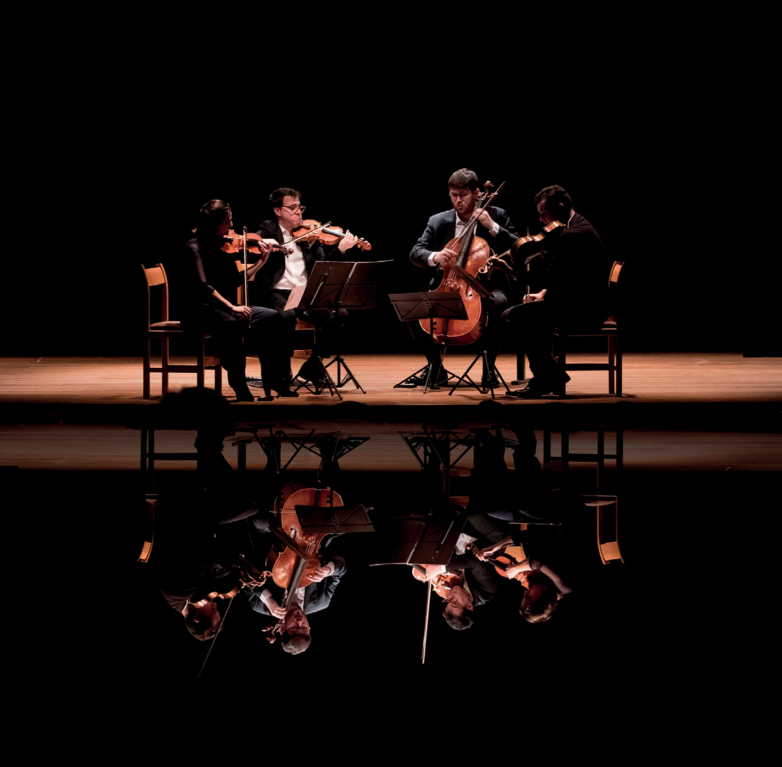
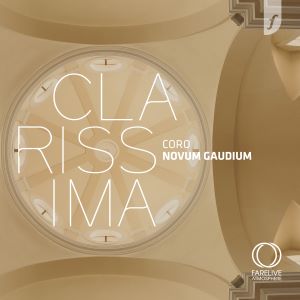
Cuarteto Iberia
New American Symphonies (World Premiere Recordings), Bill Charlap, Jim Beard, Jim Pugh, Ted Nash, Marin Alsop. Anderson Audio New York 2026 (DXD 32-bit, DSD256, Stereo) Edit Master Sourced HERE
I've not yet seen a review of this new recording that wasn't enthusiastic. And after reading several of them – from Frank Doris at Copper, Michael Fremer at Tracking Angle, and Taylor Perry at ShoreFire Media – I found myself wondering whether I had anything useful to add. There are, after all, already plenty of words being written about this remarkable project.
But this is such a luscious, beautifully conceived, and beautifully recorded album that I would be remiss if I didn't bring it to your attention – just in case you've somehow missed it.
New American Symphonies is an album of American music for large jazz ensemble: trombone, reeds, brass, double bass, guitar, piano, drums, percussion, and more. And it sounds gloriously, unmistakably American. More importantly, it is a lot of fun.
The opening work, Roy Harris's American Symphony (1938), is the album's great historical curiosity. Sometimes called the "Trombone Symphony," Harris wrote it for Tommy Dorsey and his orchestra. Dorsey's band rehearsed the work once, found it extraordinarily difficult, and abandoned it. It was never publicly performed. Nearly ninety years later, Jim Pugh has finally brought it back to life, making this the first recording of the long-lost work.
And what a shame it was that we had to wait so long.
The first movement is a rollicking romp, full of the kind of rhythmic energy that makes it easy to understand why this music must have seemed so startlingly out of place – and perhaps so difficult to play – to Dorsey's musicians. There are echoes of American fiddle tunes here, along with sounds that bring to mind Copland's Rodeo. The score calls for the first movement to be played "vigorously," and that seems almost understated once this band gets hold of it.
Because this is some band.
Jim Pugh has assembled an extraordinary collection of musicians, and Marin Alsop is at the helm. Just look down the list of names on the album jacket: Bill Charlap, Jim Beard, Ted Nash, and a host of other first-rate players. Technically, they are beyond reproach. But what makes this performance so enjoyable is that they don't merely demonstrate how well they can play. They play. The Harris simply rollicks.
Scott Ninmer's Night Suite (2014) takes us nearly eighty years forward and into an entirely different musical world. Written specifically for Pugh, it is contemporary jazz rather than a rediscovered artifact of the Swing Era. Yet the contrast between the two works is one of the album's pleasures.
The suite begins with a relaxed swing and gradually gathers energy. Ted Nash's soprano saxophone solo is stunning and deserves particular mention. But for me, it is Pugh's trombone that ultimately steals the show. His playing has an ease and fluency that makes even the most demanding passages sound effortless.
And this is where I find myself simply giving up on analysis.
I settle back into my chair, close my eyes, and immerse myself in the vibe.
That is more or less how Night Suite proceeds for me. This is large-ensemble jazz of the very best kind, with superb musicians following a relaxed, sometimes wandering musical path. Doubled brass and winds create a wonderfully rich texture, individual instruments emerge from the ensemble and recede again, and Pugh's trombone periodically rises above it all to reclaim the lead. There is plenty to listen for, but nothing that demands work from the listener.
Just sit back and enjoy it.
And then there is the sound.
Jim Anderson and Ulrike Schwarz have produced exactly the kind of recording one hopes for from Anderson Audio New York: clean, open, extraordinarily detailed, yet completely natural. The large ensemble has room to breathe, individual instruments are beautifully resolved, and the overall presentation has a richness that draws me into the performance rather than calling attention to the recording itself.
This is a recording that makes me want to turn down the lights, find some quiet time, close my eyes, and simply listen.
I think you will, too.
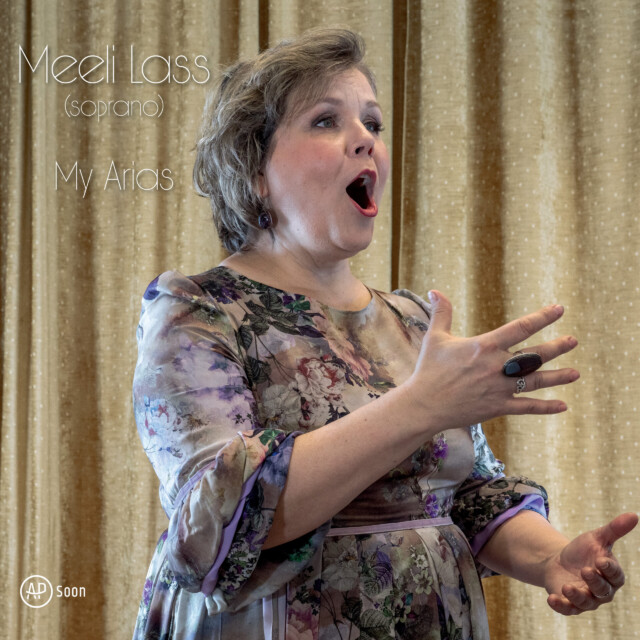
My Arias, Meeli Lass (soprano), Helin Kapten (piano). APSoon Recordings 2026 (One Mic Recording) (Pure DSD256, Stereo) Edit Master Sourced HERE
There are times when music-making simply fills and satisfies the soul of the maker, with no greater goal. This, I think, describes soprano Meeli Lass, Estonian singer, chorus leader, mother, and a person of great personal charisma, who says her mother always told her she started carrying a tune and singing even before she could speak. Her love of this music is readily apparent, and heart-warming.
In 1989, she became the first Estonian musician to be accepted into the University of Music and Performing Arts in Vienna. But the economic conditions of the time and visa problems prevented her from taking her place there. Instead, she entered the theater in Estonia, first as a dressmaker, then as an opera chorus singer, and eventually as a soloist. The Estonian National Opera was her home for 26 years, and the works of Puccini, sung here, became her principal love.
She writes that, "Singing transports me into other dimensions; I forget all about everyday worries and troubles." She further says that she always dreamed of making a record. And Aular Soon, founder and chief engineer of APSoon Recordings, offered her that opportunity: to make this album "above all as a keepsake for my five daughters and my grandchildren."
She concludes in the enclosed notes, "If this album manages to touch at least one more soul, it will have fulfilled its purpose. I am grateful."
Well, Meeli Lass, you have touched me with your love of music, your love of singing, and your generous spirit. Thank you.
And Aular, your one-microphone recording has wonderfully captured this experience. It is a recording that Meeli and her family should treasure.