
Prior to my move a few years ago to Charleston, South Carolina, my listening environment at my home in Georgia was a virtual tomb, and I mean that quite literally. The basement room was encased with concrete walls on three sides, and was bermed into a hillside that completely blocked any radio and television signals. Completely. We were so far outside the metro Atlanta area that our television reception was, well, nonexistent on the average day, and I’d just made the conscious decision to cut the cord with regard to cable TV. Yay. At least in the basement where the audio system was located, there was no RF interference, no spurious radio signals to pick up, and virtually no noise of any kind. My room there wasn’t perfect, but from a noise standpoint, it was heavenly.
Fast forward to coastal South Carolina, where at less than twenty miles from the ocean, the topology is flat, flat, flaaaaat. Television and radio reception are perfect, especially in my upstairs audio space, which has nearly unimpeded access to just about every signal of every kind known to man. Upon finally getting my system up and running, the first thing that greeted me from either my Musical Surroundings or Sutherland phono preamps was a full-volume sermon from a local AM radio gospel broadcast. I needed both phono preamps, as I was running two turntables at the time, but no amount of judiciously considered cable routing could completely eliminate the problem. I was still writing for PS Audio’s Copper Magazine then, and reached out to editor Frank Doris to see if I could possibly get a trial on one of PSA’s Stellar phono preamplifiers, which quite usefully had dual phono inputs. After getting it properly integrated into the system, I could finally listen to LPs without also hearing the gospel preached to me at maximum SPLs.
The Stellar’s sound quality was to die for, but over time, I realized that it had its own laundry list of eccentricities. It was really susceptible to poor cable routing, and while it rejected the gospel of Jesus, it didn’t always reject hum or other forms of oscillation noise. And it left much to be desired in terms of its adjustability and flexibility—which at its $3000 MSRP baffled me endlessly. Late last Fall, a thread popped up in my Facebook feed where some random guy was singing the praises of Parks Audio’s Waxwing phono preamp, and how it was undeniably the audio bargain of the century. As I read through the cavalcade of responses on the thread, many shared in his praise, but others were quick to damn the Waxwing—it’s not pure analog, there’s digital signal processing involved, it doesn’t matter how great it sounds, mixing analog with digital is absolute heresy! I was intrigued, to say the least, and fired off an email to Shannon Parks, who quickly responded and got a Waxwing to me in very short order.

What’s all the hoopla over Waxwing?
Is it analog? Is it digital? Actually, it’s both. Waxwing is an exceptionally well-made analog phono preamplifier that uses digital signal processing to achieve an extensive level of functionality. In fact, I haven’t come across anything so far it’s not capable of, and the feature set incorporated in Waxwing is beyond belief at its $500 MSRP—and each unit is made by Shannon Parks in the USA. Waxwing’s sound quality is beyond superb, so what’s all the ruckus about from the analog purists?
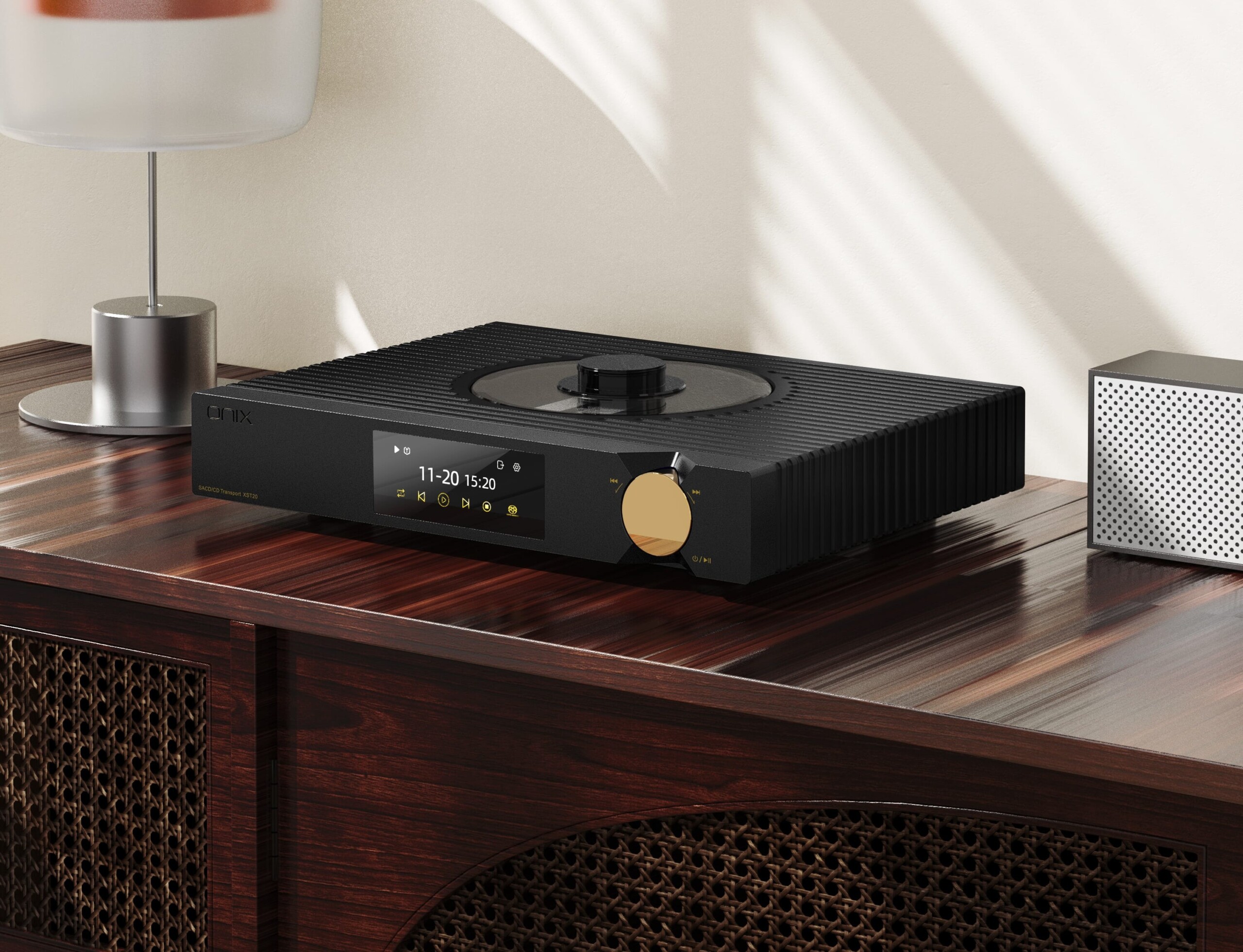
I’ve been in the audio game for decades; I’ve pretty much seen and heard everything, and I enjoy both analog and digital music sources in my system. I’m an old-school LP spinner from way back, but also a firm believer that great digital is every bit on par with great analog—heck, I have an Onix Zenith SACD/CD transport in for review; it's playing through a Topping true 1-bit DAC, and the combo has me totally rethinking the lowly compact disc’s place in my audio hierarchy. I’ve been listening to CDs for forty years now, and they’ve never, ever sounded this great! And with regard to analog vs. digital—in an age where it’s almost impossible to ascertain the true provenance of many LP masters, whether new or reissues—there’s very likely a digital stage at some point in the process. Remember the Mobile Fidelity fiasco from a few years ago, where the analog purists just about lost their shite over the revelation that MoFi was using a DSD transfer to master their LP lacquers from? I’ve been reviewing a fair amount of MoFi One-Step and standard LPs over the last several years here, and they’re often the finest sounding version, far beyond doubt, of any issue or reissue I’ve heard of a particular album. Analog and digital are more closely entwined than many audiophiles realize, and in terms of sound quality, I often find that over a great system, both sound equally impressive. I'm totally untroubled by any digital circuitry in Waxwing’s design.
Waxwing uses either your Android or iDevice for setup and control, and apps are available from Google Play and the Apple App Store for free download. The app always recalls the previous settings, so it’s basically set-and-forget, but there are also 21 presets available should your system setup or listening habits require broader access. The range of compatibility with both Moving Magnet and Moving Coil cartridges is fairly astonishing, with 77 gain settings from a -4dB line input up to 72dB for ultra-low-output MC cartridges. The default setting is 38dB for MM cartridges, but Waxwing also features a built-in calculator that allows you to set the gain perfectly for your particular cartridge. And should your chosen setting cause an overload occurrence, the app alerts you so you can easily scale the gain back a dB or two if needed. The ease of setting and controlling gain is far beyond that of any phono preamp in my range of experiences, where it often seemed that the higher-end the brand, the greater the level of difficulty in getting under the hood to change out jumpers or resistors as necessary.

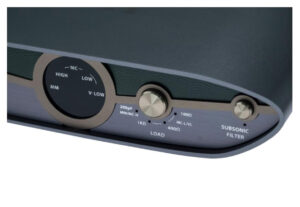
The only load settings are 47k Ohms (MM) or 200 Ohms (MC), but the “Air” setting can be used to fine-tune the load characteristics for any particular cartridge. Having futzed with load settings for eons on some of the least user-friendly phono preamps ever, Waxwing’s setup is surprisingly (and functionally) quite elegant. Additional setting options on Waxwing allows you to more closely dial in your sound preferences; those also include Warmth, Treble, Bass, and Bass Boost settings that help compensate for system incompatibilities or issues with particular LPs. Filters for Hi-cut (20kHz default), Lo-cut (25Hz default), and Derumble are available, and tones can be generated to aid in adjusting your cartridge Azimuth. A multi-function Phase control provides selections for normal, inverted, mixed, and null options; Balance allows for fine tuning of channel balance irregularities.
Playback modes include Stereo, Mono, Super Mono, and Left and Right Mono—this is particularly useful to me, as I listen to and review a lot of mono LPs, especially classic jazz titles from Craft Recordings’ Original Jazz Classic series. I’ve played around with the various mono settings, and generally use the Super Mono with just about everything—none of my previous phono preamps had mono compatibility, and trust me—Waxwing’s mono flexibility is the bomb! Super Mono continuously monitors the record during playback, then chooses between the various mono modes on-the-fly to achieve the best sound quality for any particular groove geometry, and it really works! None of my previous phono preamps has even had so much as a simple mono switch, and that also puzzled me greatly.

About a dozen classic EQ curves are also available, with the RCA RIAA equalization curve being the default setting, though you can also create custom curves. An interesting feature is the FX (Effects) mode, which allows you to emulate classic nonlinear transfer functions like “Tube” or “Tape.” “Tube” acts as a dominant 2nd harmonic distortion device—like a 300B triode tube—adding as much as 7% distortion at full output. While “Tape” acts as a dominant 3rd harmonic distortion device—like a classic Ampex open reel—adding about 3.5% distortion at full output. Both are quite fun to play with, and having a 300B SET integrated among my amplifiers, I really think Shannon Parks nailed the “Tube” effect. Both brown and pink noise can also be generated within this selection; brown noise is described by Parks as an “Eno-esque” experimental sound tool, while the pink noise tones can be used with an octave real-time analyzer for room equalization.

One of the coolest functions of Waxwing is the “Magic” setting, which gently attenuates pops and clicks on LPs, making them sound better than ever, and it’s functionally seamless in operation. There’s an onboard parametric equalizer, the ability to log phono playback hours on your cartridge stylus, and a selection that will play grade the condition of LPs. All told, there are over 500 adjustable settings for LPs and 78s, and Waxwing offers not only RCA analog inputs and outputs, but coax and optical digital outputs as well. An onboard DAC/ADC assists with delivery of the DSP functions to the analog outputs, and the digital outputs can also be used to convert your LPs to FLACs using a program like Audacity or Vinyl Studio.
The Waxwing’s level of functionality is staggeringly intense, but how does it sound?

Setting up Waxwing
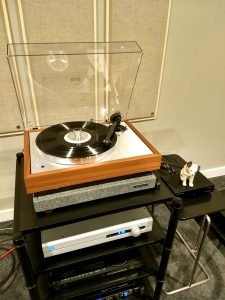
Click my name in the header above to see the complete complement of gear in my system. On the analog side, I’m currently running a Pro-Ject Classic turntable that’s fitted with an Ortofon Quintet Bronze MC cartridge. Connecting Waxwing to the system was a snap; other than the digital outputs on its rear panel, the connections are essentially the same as with any other phono preamp. My system interconnect cables are Copper Cryo OCC from Audio Art Cable, which are fairly stiff and heavy; I was concerned that they might cause the diminutive Waxwing to tip over or lean, but that was never the case. And their bulky Viborg locking connectors also ended up fitting the limited rear-panel space perfectly. My turntable is positioned across the room from the equipment stack, so I’m running a 6 meter Audio Art interconnect cable from Waxwing’s phono output to my preamp or the SET integrated, depending on which happened to be in use. Waxwing’s voltage drive was more than sufficient to effortlessly deliver its signal to both my preamplifier and integrated amp.

Waxwing is supplied with a wall-wart power supply that connects to the unit with a USB cable; due to my turntable’s room placement, powering the unit with the wall-wart wasn’t exactly practical. I happened to have a 5V battery pack available, and used it to provide power to Waxwing, linking the two units with a high quality USB cable. The arrangement works perfectly, and the battery provides enough power for a week's worth of typical listening sessions. Once I downloaded Waxwing’s Android app to my phone and tablet I use for system control, I was off and running. Waxwing’s onboard gain calculator recommended 61 dB as the correct setting for the low .3mV output of the Ortofon Quintet Bronze MC. While the only MC load option on Waxwing is 200 ohms, using the device’s “Air” setting allowed me to fine-tune the load characteristics, and I eventually settled on a -2 dB setting.
With my new noise reality here in the Low Country, I was exceptionally curious to see how Waxwing responded in my room environment. With the unit at stasis, there was no hum, no noise, no preachers shouting at me, no oscillation or RF—just absolute silence, regardless of how far I cranked my preamplifier’s volume knob. Simon and Garfunkel’s “The Sounds of Silence” is a totally appropriate analogy, where powering on my phono setup and not hearing anything was absolute music to my ears! And once the music started playing, I found Waxwing to be on par with the very best phono preamps I’ve ever heard—in my system or any other—with a level of analog musicality that simply sparkled with every LP I placed on the platter. Once I established the baseline settings that worked for my system, I played about with many of Waxwing’s available settings, but mostly ran with only “Magic” continually switched on.
Throughout my evaluation of Waxwing, I had multiple pairs of loudspeakers in and out of the system, including my new production KLH Model Fives and Magneplanar LRS panels, along with review pairs of Klipsch Heritage Series Heresy IV’s and SVS Ultra Evolution Towers. All ran in tandem with a quad of Vera-Fi Audio Caldera subwoofers, and most everything was powered by a Naiu Labs Ella stereo power amp, controlled by a PS Audio Stellar Gold preamplifier. The lone exception was the pair of Klipsch Heresy’s, which were mostly powered by a Reisong Boyuurange A50 MkIII SET 300B tube integrated amp. Waxwing worked synergistically with each amp/loudspeaker setup, providing nothing less than spectacular sound that was easily on par with the much more expensive phono preamps I had available to me.
Listening and music choices
Over the course of several months, I listened to countless LPs from my personal library, along with newer acquisition LPs and many that were in house for review. In each case, playback with Waxwing in the system was never less than impressively musical.

An excellent album I regularly use for equipment evaluations is Impex Records’ 45 rpm 1STEP, 180 gram 2-LP reissue of jazz pianist and singer Patricia Barber’s Nightclub. It’s a record I know intimately, and despite being sourced from digital tapes is among the most naturally recorded and finest sounding LP sets in my entire library. Nightclub truly blurs any lines between analog and digital, and is a textbook example of great recording techniques. That’s due in no small part to Jim Anderson’s excellent recording, which provides an immersive listening experience that really pulls you into the performances. Impex’s 1STEP of Nightclub is about as “you are there” as it gets, and the LPs playing through Waxwing exhibited a level of delicacy, transparency, and detail I wouldn’t have expected from a $500 phono preamp. Through Waxwing, Nightclub was delivered with supreme musicality that was the match for any phono preamp in my recent experience.

Johnny Cash with His Hot and Blue Guitar is the second release in Intervention Records’ Sun Records Hi-Fi Series, which focuses on the classic mono recordings from Sam Phillips’ Sun Records from the 1950’s. The sound quality of this LP is to die for, and the wide Fifties mono recording perfectly captures Johnny Cash and the Tennessee Two as "live and in your room" as you're ever likely to hear them. Johnny Cash with His Hot and Blue Guitar is a sonic gem that’s filled with classic songs I've heard played countless times across the decades, and the versions on this amazing album are the definitive performances that made Johnny Cash a living legend. Sam Phillips knew what a tremendous talent he had in Johnny Cash, and thankfully, he also knew exactly how to capture his magic on tape for all time. This was a great album to play with Waxwing’s Mono and Super Mono settings, and the perfect sound it delivered didn’t disappoint!

Backwaters from the Tony Rice Unit is an absolute master class in acoustic performance; it covers so very much ground stylistically, it almost seems oversimplified or disingenuous to call it bluegrass. Tony Rice is a guitarist's guitarist, and he's surrounded on this recording by a stellar cast of virtuoso players, such that every track is a virtual highlight reel. But Rice's phenomenal fretwork never steals the spotlight, and he allows each of the musicians ample room to display their artistry with exceptionally spirited solos. Backwaters is a set of magnificently crafted performances and perhaps one of the greatest bluegrass albums of all time. Fidelity Record Pressing’s 180 gram LP for Craft Recordings is one of the finest LPs to grace my turntable in ages, and has quickly become one of my greatest sonic treasures. Waxwing presented this remarkable LP as the acoustic masterpiece it is, with sound that matched or exceeded preamps that retailed for up to six times its MSRP. This kind of performance from a $500 phono preamp is nothing short of astonishing.

Mobile Fidelity's reissue of ELP's debut album, Emerson, Lake & Palmer, is beyond doubt the finest version of this LP I've ever heard, and the ultra quiet LP from Fidelity Record Pressing is key to allowing you to hear through to that goodness. Of course it utilizes MoFi’s Gain 2 processing, which incorporates a DSD256 transfer prior to lacquers being cut for the LP. MoFi’s LP of Emerson, Lake & Palmer truly satisfies me on every level: it’s an ultra-quiet pressing with incredible transparency, enhanced clarity and delicacy of sound, and a detailed presentation that casts an uber-believable soundstage. And of course, crushing, sledgehammer dynamics, all of which are flawlessly presented through Waxwing.

Fusion great John McLaughlin's latest album is Music For Abandoned Heights, also on Impex Records. The new LP is a triumph on every level, and easily proves that McLaughlin is as totally relevant as an artist and musician now as at any point in his lengthy career—and he’s 84 years old! Music For Abandoned Heights is a spectacularly good-sounding LP, and while some audiophiles might consider its lowly 24/48 PCM source somewhat questionable, it’s a reference level recording in every respect. Stylistically, the record covers a broad range of musical territory, but hews a line very close to jazz and jazz fusion, while playing like a classic John McLaughlin album that touches on hallmarks from throughout his very diversified career. Music For Abandoned Heights is an album of stunning contrasts, and Waxwing presented this music with impressive transparency and unbridled dynamics.

Waxwing has jumped to the top of my recommended products list!
Parks Audio’s Waxwing was a shock to my senses; for only $500, I wasn’t expecting such an extensive level of technical flexibility, and was especially floored by its impressive sound quality. And Shannon Parks isn’t content with the status quo; probably in the time Waxwing has been in my system, it's been upgraded at least a half-dozen times—he’s always receptive to user input, and is constantly improving each model he manufactures. Waxwing had such perfect synergy with my system, the other phono preamps I had access to were very quickly banished to the storage closet, and every LP I’ve played across Waxwing has thrilled me with astonishingly good sound. Never at any point during the evaluation did thoughts of “digital” or “analog” ever enter my process, I was much too focused on the glorious music filling the airwaves surrounding me.
There's a plethora of Waxwing's functionality I still haven't delved into; for example, I haven't really played around with its ability to rip LPs to digital files, nor have I experimented extensively with the PEQ (parametric equalizer) function. And I definitely need to check out its Azimuth setup capability, play with the various Phase options, and experiment with play-grading LPs. I'll get around to those, and eventually update this review.
Many thanks to that random guy on Facebook, and to Shannon Parks for his willingness to indulge my review request. Parks Audio Waxwing comes very highly recommended. Audio bargain of the century? It’s more like the audio bargain of my lifetime!
Parks Audio Waxwing phono preamplifier
Retail: $500
Parks Audio
All images courtesy of Parks Audio and the author.