
If you’re unfamiliar with my work, you should know that I am an unapologetic vinyl devotee. Since my initial record-playing days in the early 1960s, my approach to cleaning and caring for my LPs has grown steadily more effective and sophisticated over the decades. And as I am a bit of a historian, let’s take a quick trip down record cleaning lane.
Record Cleaning Genesis
Once I realized that my records could accumulate dust and other debris through play and transport, sometime in the mid-1960s, I found the Cecil Watts' products, the “Parastat” brush first, then the “Parastatik Disc Preener.” The “Parastat” packed some 30,000 incredibly fine nylon bristles into a central brush, sandwiched between two thick pads of soft plush velvet! The “Preener,” which came along a little later, was a small cylindrical roller wrapped in plush velvet pile fabric. Removable caps on each end of the roller revealed a second, removable perforated plastic tube with a foam wick inside. Moistening that wick with distilled water, reinstalling it into the core roller, and replacing the caps, allowed it to deliver a controlled amount of humidity to that outer velvet surface.

With the meteoric rise of the DiscWasher Record Cleaning system in the early to mid-1970s, the Watts products quickly vanished from the market. Though this era saw the rise of plenty of other sprays, wipes, and brushes, the DiscWasher system was the unchallenged king of LP maintenance from the mid-1970s straight through the late 1980s.

Given today's subject, it is important to note that the mid-1960s actually gave rise to vacuum-powered LP cleaning. Percy Wilson, the technical editor of The Gramophone magazine, presented his prototype "Record Doctor," the world's first electric LP cleaner with separate wet application and suction drying stages, at the AES convention in New York in October 1965. Keith Monks purchased his design, and it set the stage for the legendary Keith Monks Record Cleaning Machine that debuted a few years later in 1969. Oh, and because the nylon bristles used for the Watts Parastat brush were so effective at deep-groove scrubbing without scratching the vinyl, Keith sourced the exact same nylon brushes to use as the primary scrub brushes on that classic RCM.
Over decades of playing records, starting in the early 1960s, alongside the steady advancing evolution of my turntables, tonearms, and cartridges, I’ve tried just about every manual cleaning method imaginable, rigorously testing various fluids, brushes, and drying techniques. My experimentation spans commercial solutions from Allsop, Disc Doctor, GrooveWasher, L’Art du Son, LAST, Mobile Fidelity, Nitty Gritty, Record Research Lab, Record Doctor, Spin Clean, VPI, and even one from Bags Unlimited. Beyond the commercial offerings, I also formulated many of my own DIY blends, utilizing specialized surfactants like TergiKleen, Triton X-100, and Ilford Ilfotol.
Once I could afford them, I dove into the world of vacuum-powered cleaning machines. I used one-sided cleaners from Nitty Gritty and VPI, as well as some that cleaned both sides at once, like the Nitty Gritty Mini Pro. This progression naturally led me to enzymatic cleaning processes, moving from early solutions like Buggtussle’s Vinylzyme to Paul Frumkin’s exceptional three-step Audio Intelligent Vinyl Solutions. Then, an absolute game-changer redrafted my entire worldview!

The Original Game Changer
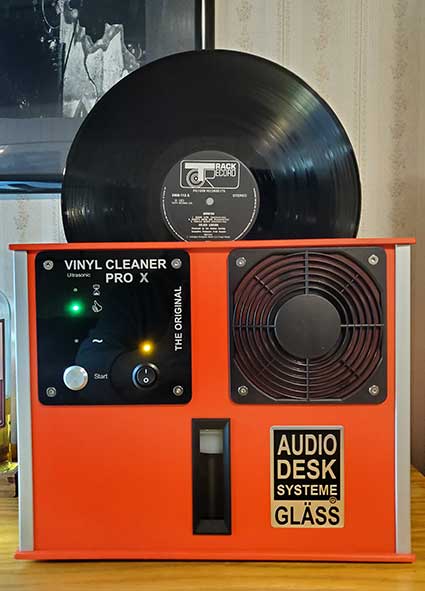
I had to go back to my show notes to be sure I could accurately recall when I had my first exposure to the original Audio Desk Systeme Ultrasonic Vinyl Cleaner, a new and attention-grabbing design from Reiner Gläss and his Germany-based company. During 2011’s T.H.E. Show in Las Vegas, Robert Stein of Ultra Systems, the exclusive US distributor at the time, was demonstrating it just inside Conference Room F near the Red Rock Ballrooms in the Flamingo Hotel's "Subterranean Marketplace."
 Representing an impressive, comprehensive, and extremely effective advance in LP maintenance, permitting you to dynamically wash, dry, and drop an LP into play in just over six minutes, with an asking price of nearly $4000, and with three teens ready to head off to college, I was simply unable to justify that kind of expense at that time. Yet as the first fully automated ultrasonic record cleaner built specifically for the consumer market, it completely reset the bar for the most exhaustive record care.
But the time came when my desire and curiosity finally outweighed my frugality, and I purchased my first Audio Desk machine. From the first LP that I ran through its robust cycle, it forever reformed how I thought about, cared for, and heard my large and ever-growing LP collection. The results were so immediately, so vastly superior to anything I'd ever achieved with any manual or vacuum-based process I’d used before it, that I abandoned every other option outright. Why?
Why it Works
Ultrasonic cleaning works by a process called acoustic cavitation. The machine's transducers fire ultrasonic sound waves into a bath of distilled water, creating extremely rapid alternating cycles of pressure. During the low-pressure valleys, the water’s molecules are stretched apart and create microscopic vacuum bubbles. Then, a microsecond later, the high-pressure peaks slam into the bubbles. Because the bubble is a tiny pocket of empty vacuum, with no internal structural integrity to resist that impacting force, the bubble collapses symmetrically, and the rushing water collides with itself at the center.
That instantaneous collapse focuses all that kinetic energy into a microscopic point, creating a high-speed liquid "micro-jet" moving at incredibly high speeds, along with intense, localized heat and pressure. And because the bubbles are smaller than the thickness of a human hair, roughly 75 to 100 microns, they can reach directly into the grooves, harmlessly blasting away embedded dust, mold, oils, release agents, and any other debris, a feat no brush or vacuum pad can begin to match!
The Sonic Results
The experience of hearing ultrasonically cleaned records that I’d had in my care for decades, ones I had cleaned with any number of earlier methods, was revelatory, as the sonic transformation was consistent and unmistakable. The noise floor was dramatically diminished, surface noise all but vanished, and what emerged from that newfound quietness was just as startling.

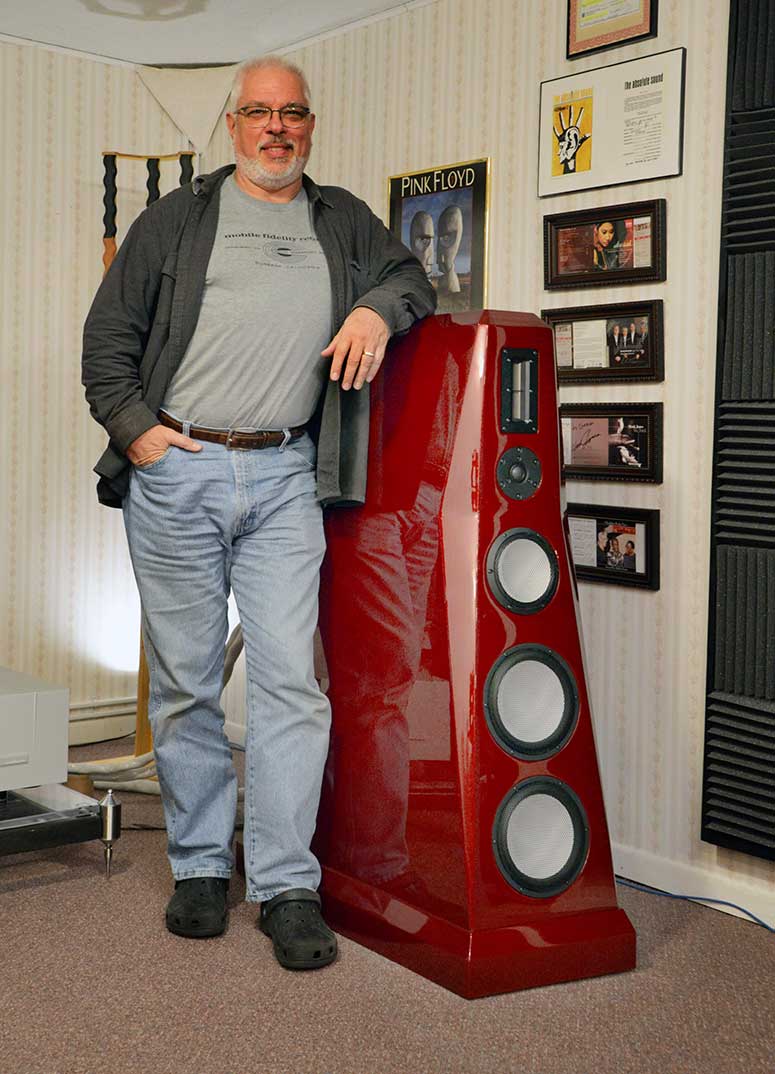
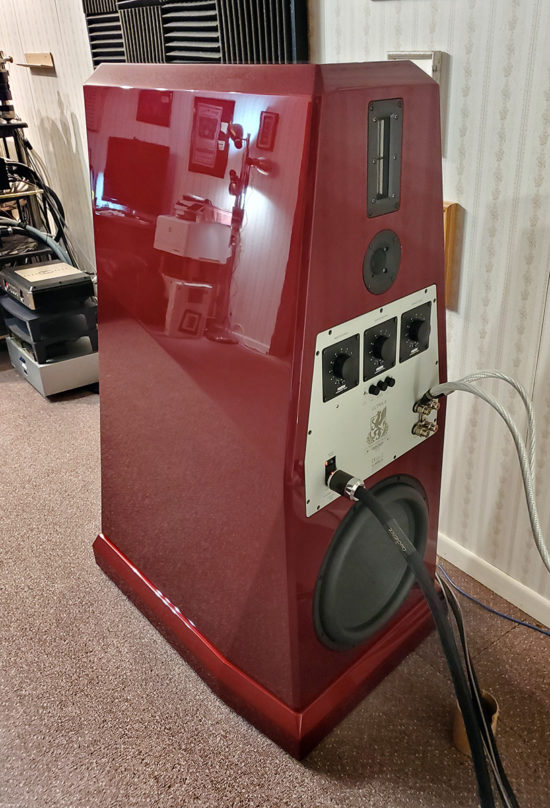
Images had gained real corporeal weight and presence, soundstaging unfolded with finer, more distinct layering, resolution was improved, bass was better developed, with refined pitch definition, and dynamics had expanded and opened up, revealing a level of nuance and shading with micro-transients that I hadn't heard from these records before. From that point on, I’ve never looked back. And in 2020, I made the move to the Pro X model, choosing the red case to match my Von Schweikert Audio ULTRA.9 Foundation’s livery.
 Objectively, ultrasonic cleaning dramatically outperforms every other cleaning method. Testing on vintage LPs shows a 6 to 12 dB reduction of the noise floor, with the sharpest gains right in the 2 to 8 kHz band, exactly where human hearing is most sensitive to pops and crackle. A vacuum RCM, using physical brushes to scrub the surface and suction to pull away liquid, simply cannot begin to match the sub-micron penetration of high-frequency sound waves.
What Makes it “Premium”
Enter the newest iteration of the Audio Desk Vinyl Cleaner, the Premium “Silent Core One”. This model encompasses so many changes and improvements that it took them nearly eighteen months to address and realize all the refinements they wanted to incorporate. Let’s explore what this latest model brings to the LP cleaning game.
The most immediate and obvious improvement is how much quieter the new Premium "Silent Core One" runs. Not only is it dramatically quieter than my Pro X, but with the new in-house-designed drive motor, it is said to be more reliable as well. A new software control system and circuit board add short-circuit protection, while the relocated, modified water pumps stay continuously cooled and can no longer overheat. And a new wet filter further optimizes fluid filtration, helping to extend solution life.

The updated microfiber cleaning rollers offer improved concentricity, further reducing noise while improving contact with the record surface during the cleaning cycle. New wear-resistant materials on the drive and output shafts, along with improvements to the drive unit itself, have boosted efficiency and reliability, while the new drying shafts have cut drying time to just three minutes. Disc rinsing now runs at higher, more effective pressure, and the drying wipers have been treated to improve streak-free evaporative drying, extend their durability, and eliminate the occasional squeak the originals sometimes had.
Addressing reliability and servicing concerns, the redesigned Premium "Silent Core One" now allows repairs to be done at newly authorized service locations, no longer necessitating a return trip to Germany should it require servicing. As well as now carrying a three-year warranty, the unit and its accessories will be sold factory direct to US customers for the foreseeable future. And with its retail price of $3599, it is also $400 lower than its predecessor, the Pro X.
Direct Comparison
To help clarify the advances the new Premium “Silent Core One” Vinyl Cleaner offers, I have recorded a closer look at, and listen to, the full cleaning cycle of both my original Pro X and the new Premium. You may see them as part of this full narrative by watching my companion YouTube episode, E274, HERE. Or you may watch each one individually at these links.
-- Watch the Pro X Experience -- Watch the Premium Experience
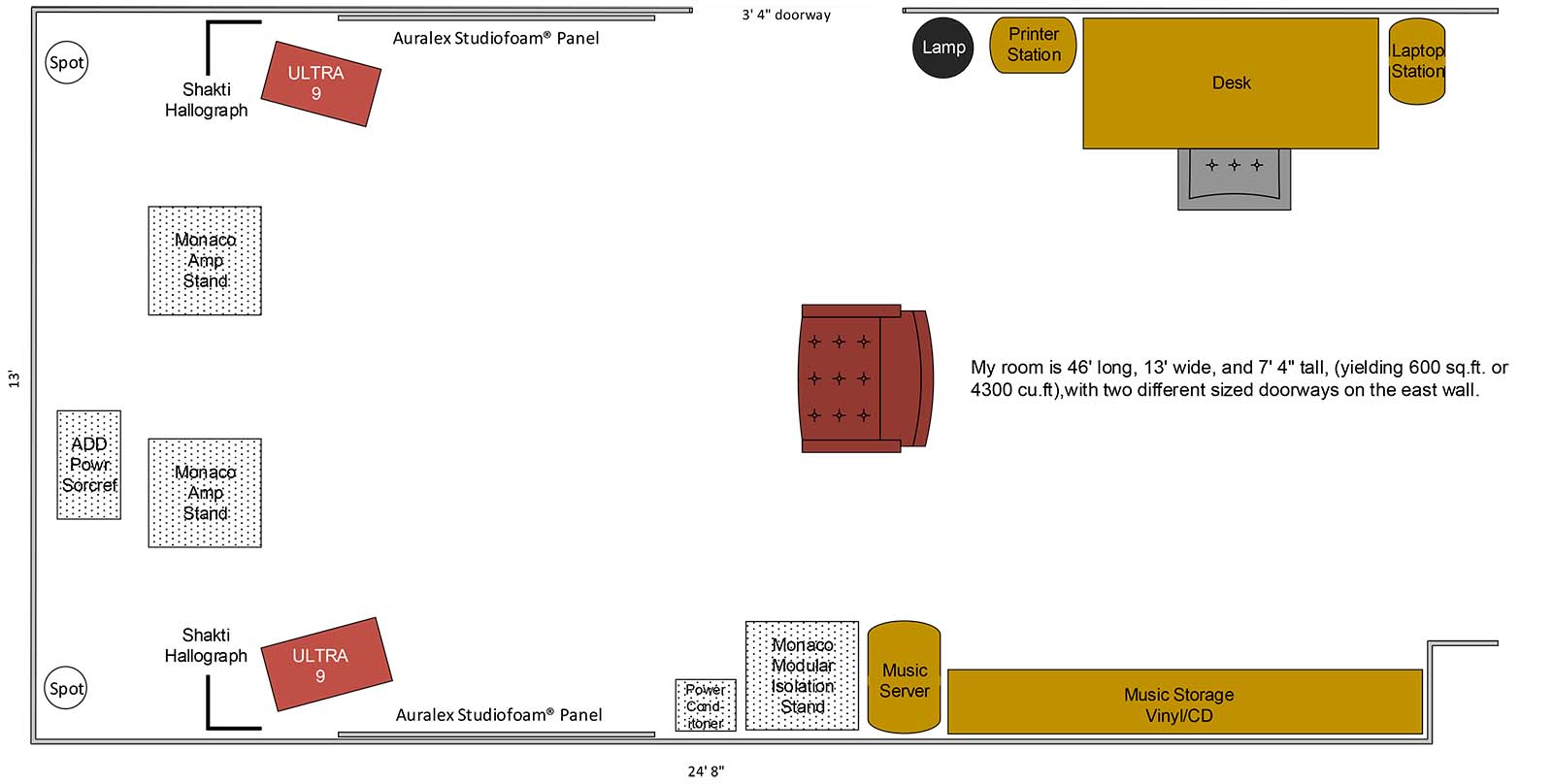
For a clear, direct comparison, I mounted my SPL meter on a stationary tripod three feet in front of either of the cleaners under examination. The meter first reveals that the ambient background noise level in the room is 34.6 decibels.
Under its duty cycle, when the Pro starts cleaning, the SPL jumps to 58.3 decibels. Moving to its drying cycle, it reaches 69.8 decibels. The same cycle with the new Premium Silent Core One shows that it reaches only 48.1 decibels, which is more than 10 dB quieter than the Pro X’s 58.3 decibels in the same cycle, and that it rises to just 61.6 decibels during the drying cycle, again reduced by nearly half as loud as the Pro X’s 69.8 decibels in this mode.
These tests clearly demonstrate that the overall reduction in operating noise level achieved by the Premium’s improvements is genuinely impressive.
Why It All Matters
You may have noted that the LP I used to demonstrate both machines today was my 1979 US promo Columbia Pitman pressing of Pink Floyd’s “The Wall.” The reality of the matter is that if you’re into vinyl, you most likely listen to older recordings, and may be prone to chasing down the earliest pressing you can find of the music you collect and listen to.
While modern reissues and remasters may offer real advances, using more modern methodologies, techniques, and cutting chains, offering 45 RPM pressings or quieter vinyl formulations, original pressings still carry advantages that no amount of technology can replicate: fresher master tapes, the direct involvement of the album's original mastering engineers, artists, and producers, and the immediacy captured by using a fresher stamper. Getting the best from these vintage pressings simply demands ultrasonic cleaning.
Yet new records benefit from ultrasonic cleaning just as profoundly as vintage ones. Every pressing run relies on mold release agents to prevent any of the hot vinyl from adhering to the metal stampers. That leaves behind an invisible chemical film in the LP's grooves that acts as a magnet for dust. Honestly, vacuum cleaning more often than not just spreads this contaminant across the LP's surface instead of effectively removing it. Ultrasonic cavitation strips it away at the source, allowing brand-new LPs to deliver wider macro-dynamics and a more genuine sense of air, straight out of the sleeve.
The Magic Of The Premium
I’ve spent considerable time cleaning LPs with the new Premium, including retreating records I'd previously cleaned as well as many that were either overdue for treatment or other recent, untreated arrivals. After the first twenty or so, the pattern was clear!
Every LP I've listened to after a spin in the Audio Desk Premium “Silent Drive One” confirmed why I'm so enamored with this machine. The sonic benefits went well beyond just revealing a quieter surface, most often delivering a somewhat dramatic leap forward in resolution, soundstaging, and immediacy.
After a quicker spin in the Premium, I was struck by the immediate, visceral sense of elevated transparency. That "vinyl artifact" sound, the sounds inherent to the playback medium itself, like groove rush and inner groove distortion, rather than sounds that belong to the actual musical signal, was drastically minimized, letting music emerge much more seamlessly from a markedly quieter void. With so much of that surface noise and mechanical byproduct stripped away, what's left sounds closer to a pure signal emerging from silence, rather than music riding on top of an audible layer of medium-specific noise. It is as if you have moved closer to the mic feed.
Also, midrange textures showed consistent, substantive gains. Vocals were stripped of hints of that forward, artificial spotlighting, taking on organic warmth, body, and bloom, with inner detail and harmonic structure rendered with real refinement.
Another consistent, exhilarating gain came in the ability to express transient speed. The rise and decay of notes, especially at lower levels, came through with far greater clarity, sharpening pace and reducing acoustic blur.
The obvious sonic gains achieved using the Audio Systeme Premium's “Silent Core One” Vinyl Cleaner, paired with its dramatically quieter operation, sealed the decision for me. I'm replacing my Pro X with the new Premium; it's that good! If you own records, you owe it to yourself to hear its impact firsthand. It represents the single most effective way to unlock the most honest voice stored on your records, and bring your LP playback to its absolute best.