PRESS RELEASE | WARSAW | 20 OCTOBER 2026
Everest Audio Labs introduces the latest version of the Everest Ascent music server
Featuring the proprietary Everest USB One card and a fully linear ATX power supply
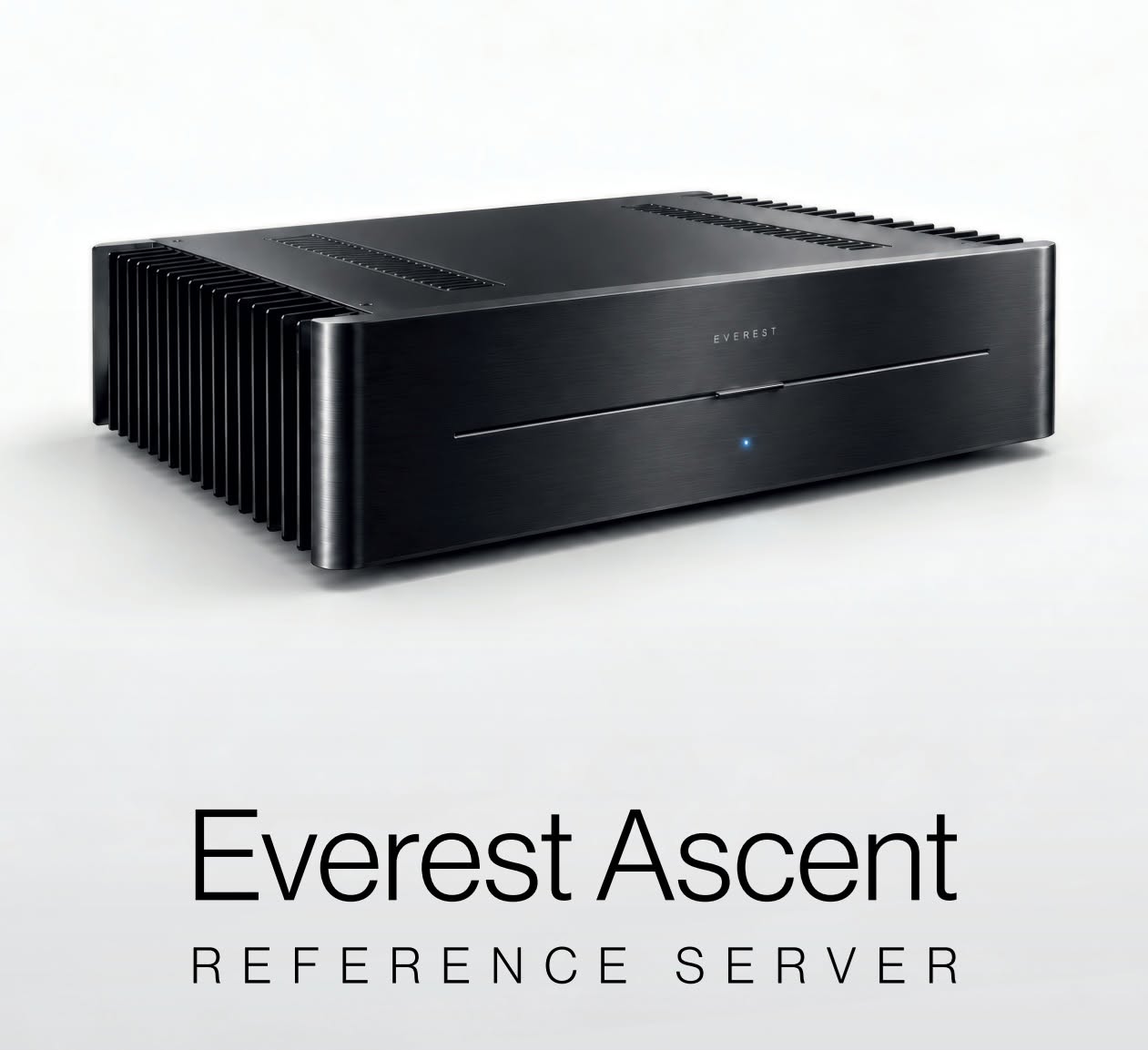
Everest Audio Labs announces the official launch of the latest version of its Everest Ascent music server. Designed for demanding digital audio systems, Ascent supports playback from personal music libraries and streaming services. The standard configuration includes the Everest USB One, a proprietary PCIe USB card developed by Everest Audio Labs as an integral part of the server. Ascent with USB One is priced at EUR 8,000 including VAT and is available now. Its debut demonstrations will take place at Audio Video Show in Warsaw on 23–25 October 2026.
The Ascent launch is accompanied by the official presentation of Everest USB One, which is already available separately at EUR 800 including VAT. Both products reflect the company’s approach to digital source design, with particular attention paid to optimising power delivery to minimise electrical noise and achieving ultralow latency.
A proprietary USB interface at the heart of the server
Everest Audio Labs belongs to a small group of music server manufacturers offering their own PCIe cards. In Ascent, the proprietary interface forms part of a complete digital source design. The company is responsible for the Everest USB One card, its integration into the server, and the power delivery provided by a dedicated section of the unit.
This approach allows the server and audio interface to be developed within a single engineering concept. In Ascent, Everest USB One receives its own linear power supply supported by a supercapacitor bank, while the operating system is optimised for ultra-low latency. The result is a preconfigured source designed to work with an external digital-to-analogue converter.
“We wanted Ascent to make long listening sessions a pleasure, with a very smooth, natural sound, free from digital artefacts. That goal guided its design. Developing our own USB One card gives us the opportunity to refine an important part of the connection between server and DAC. We can develop it alongside Ascent’s power supply and software, then evaluate the result in a complete listening system,” says Adam Mokrzycki, owner of Everest Audio Labs.
A fully linear ATX power architecture
One of Ascent’s defining features is a power supply that provides every standard ATX voltage rail through linear regulation. This includes the +12 V, +5 V, +3.3 V, +5 VSB and −12 V rails. Separate sections serve the storage and output card, bringing the total to seven independent linear regulators.
The main power supply uses a shielded 250 VA transformer and 320,000 µF of filtering capacitance. Generating the ATX rails through linear regulation reduces sources of switching noise within this section of the unit. Dedicated regulation for storage also allows its requirements to be addressed without placing it on the same supply section as the audio interface.
The design aims to provide stable operating conditions for the motherboard and the circuitry responsible for delivering the signal to the DAC. Each power supply section is matched to its role in the server, with attention to noise and behaviour under changing loads. This is one of the areas in which the company draws on years of experience designing digital audio sources.
Dedicated output power supported by supercapacitors
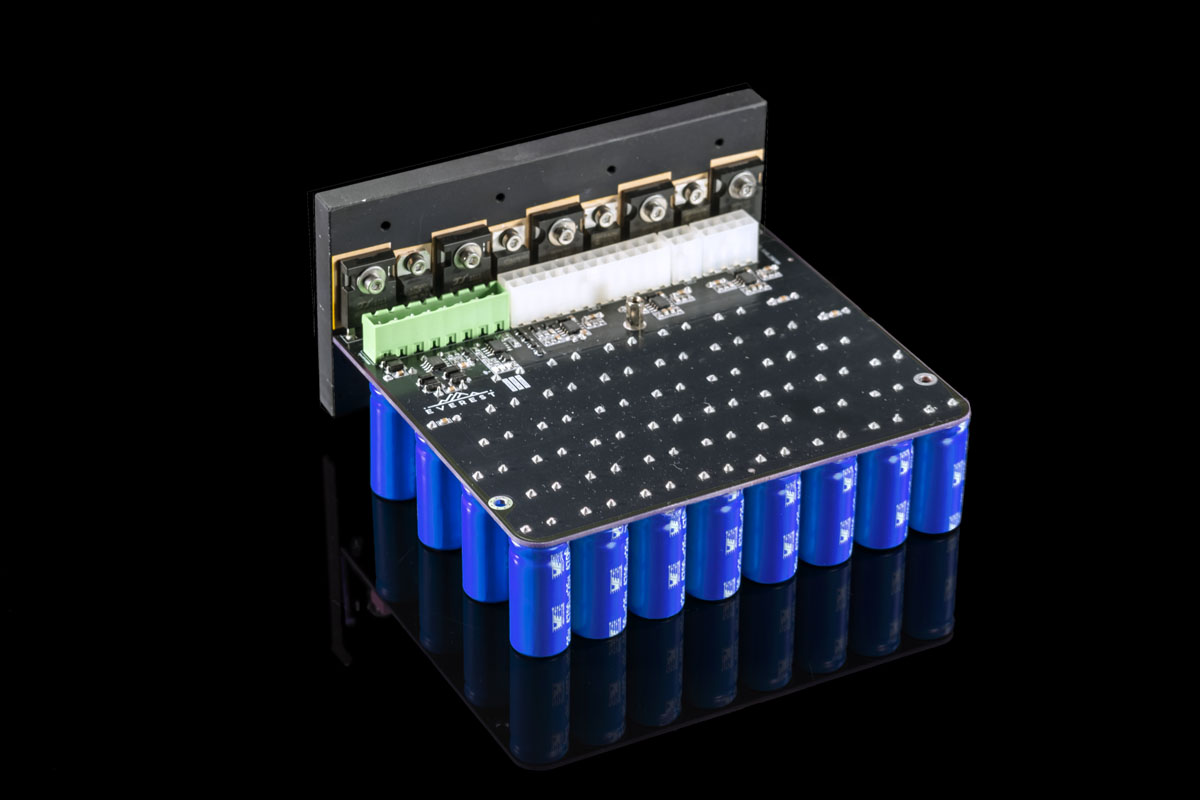
The output stage in the standard USB configuration has its own 60 VA transformer and dedicated linear power supply, with 29,000 µF of filtering capacitance. A bank of two 450 F supercapacitors provides an additional energy reservoir for the USB One card.
The supercapacitors form part of the audio interface’s power supply. Their role is to maintain a low source impedance and supply energy as the card’s instantaneous current requirements change. A separate supply section allows the operating conditions of the USB output to be refined independently of the computer’s main power supply.
Everest USB One
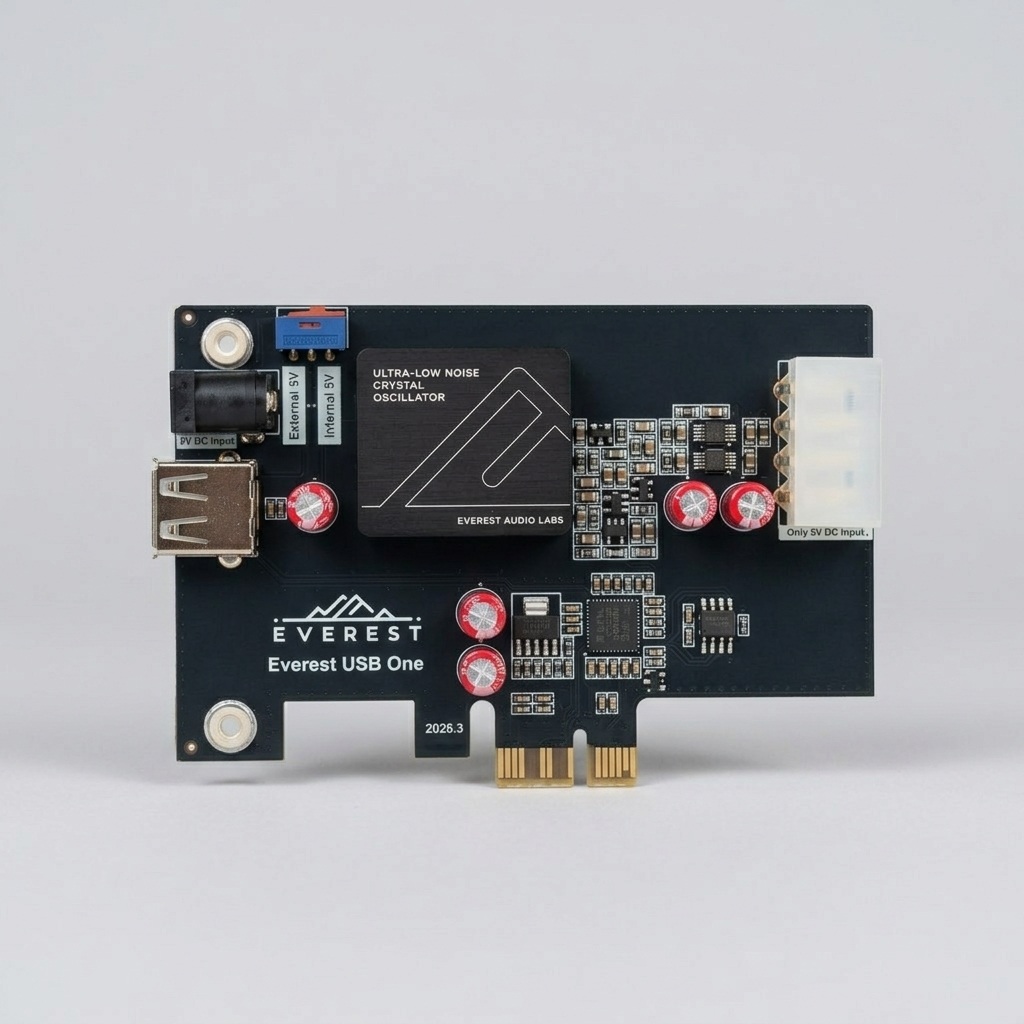
USB One is a proprietary USB host controller card for a PCIe slot, designed for music servers and computers used as sources in high-end audio systems. It is the standard interface for connecting Ascent to an external DAC. Available as a separate product, it also brings Everest’s USB interface design to other compatible platforms.
The card uses a low phase noise SC-cut crystal oscillator and ultra-low-noise LT3042 voltage regulators. The oscillator supplies the USB controller’s reference clock. Its power supply and operating environment were treated as key elements of the interface design.
The clock circuitry is enclosed in its own CNC-machined metal housing and treated with a vibration-damping compound. These measures provide shielding and reduce mechanical influences on the oscillator. Everest USB One is designed to use the standard 5 V supply voltage found in computers, making it easy to integrate into computer systems.
Offering USB One separately is an important part of the company’s product range. Owners of compatible music servers can use the same proprietary USB interface found in Ascent without replacing their entire source. Within the complete Everest server, the card also benefits from the dedicated power supply and preconfigured operating environment.
Silent operation and considered mechanical design
Ascent is built around an Intel N100 platform with 16 GB of RAM and a 500 GB system SSD. Additional storage of up to 8 TB can be specified for a music library. Both the RAM and the system SSD have been selected for ultra-low latency. Its aluminium enclosure and side heatsinks provide passive cooling without fans, allowing the server to operate in the listening room without noise from an active cooling system.
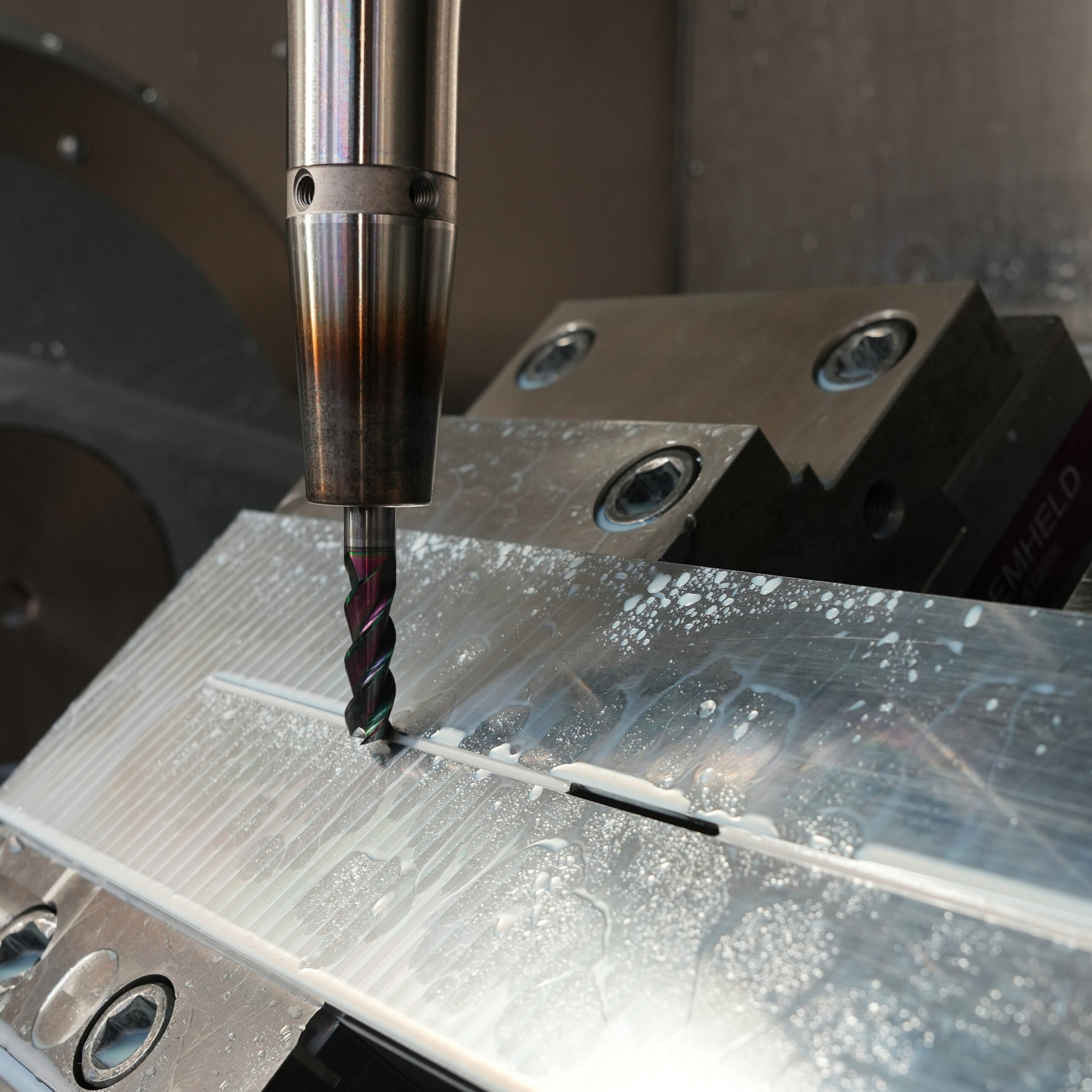
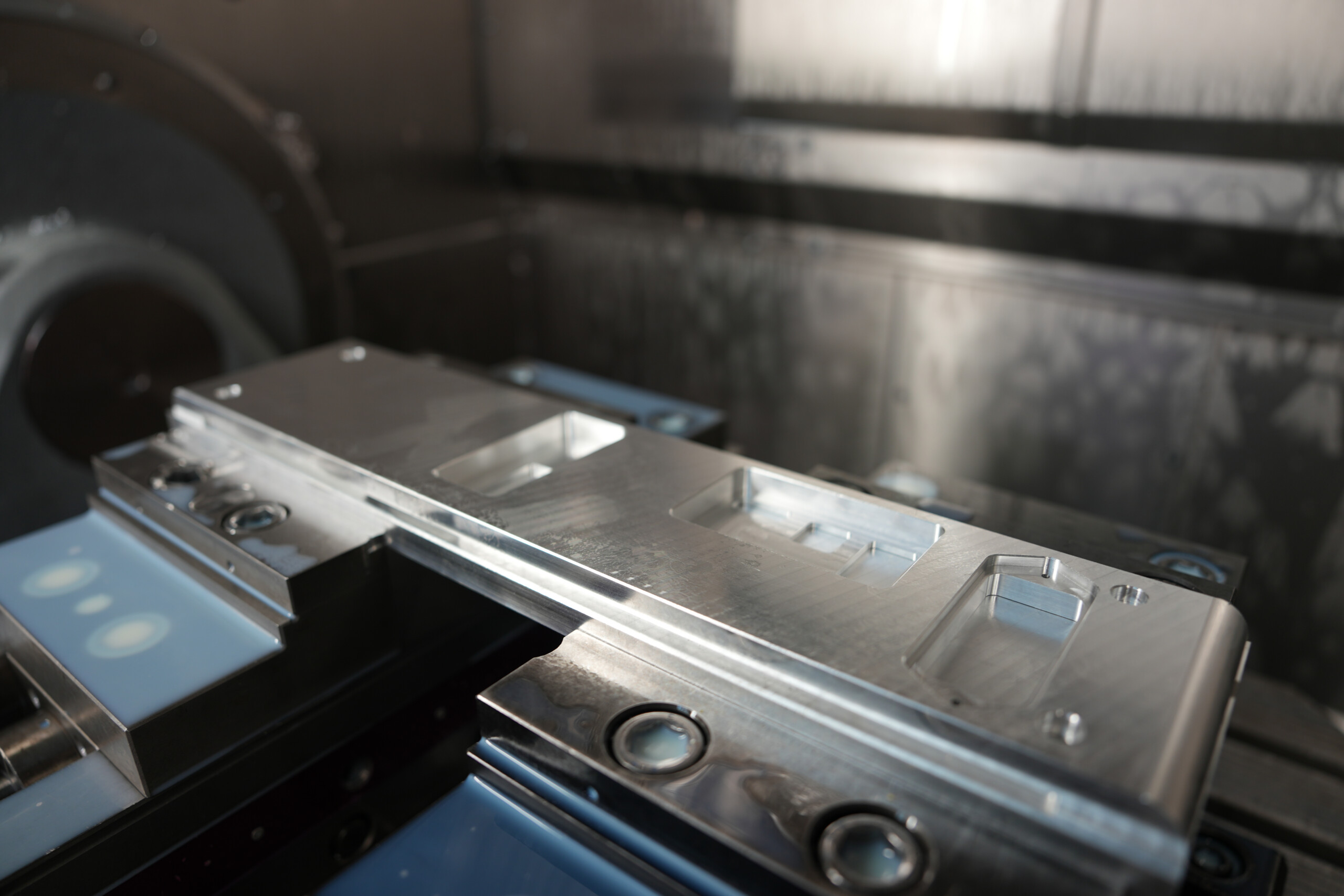
The unit is designed and hand-built in Poland. Its front and rear panels are CNC-machined from 12 mm aluminium. The enclosure measures 430 × 353 × 109 mm, and the server weighs 13 kg. The substantial panels and side heatsinks provide both mechanical support and heat dissipation.
Configured for music playback
Ascent runs a custom version of AudioLinux tailored specifically for Everest Audio Labs. The software environment is prepared for low latency and reduced unnecessary background activity. It is developed alongside the hardware as part of the complete digital source.
The server arrives preconfigured. Through the configuration menu, the dealer can select an installation of
Roon, Roon Bridge, MPD or HQPlayer NAA to match the unit’s role to the customer’s system. This allows Ascent to serve as the centre of a music playback system or as a network endpoint in an HQPlayer or Roon setup.
Everest LAN One as an alternative to USB
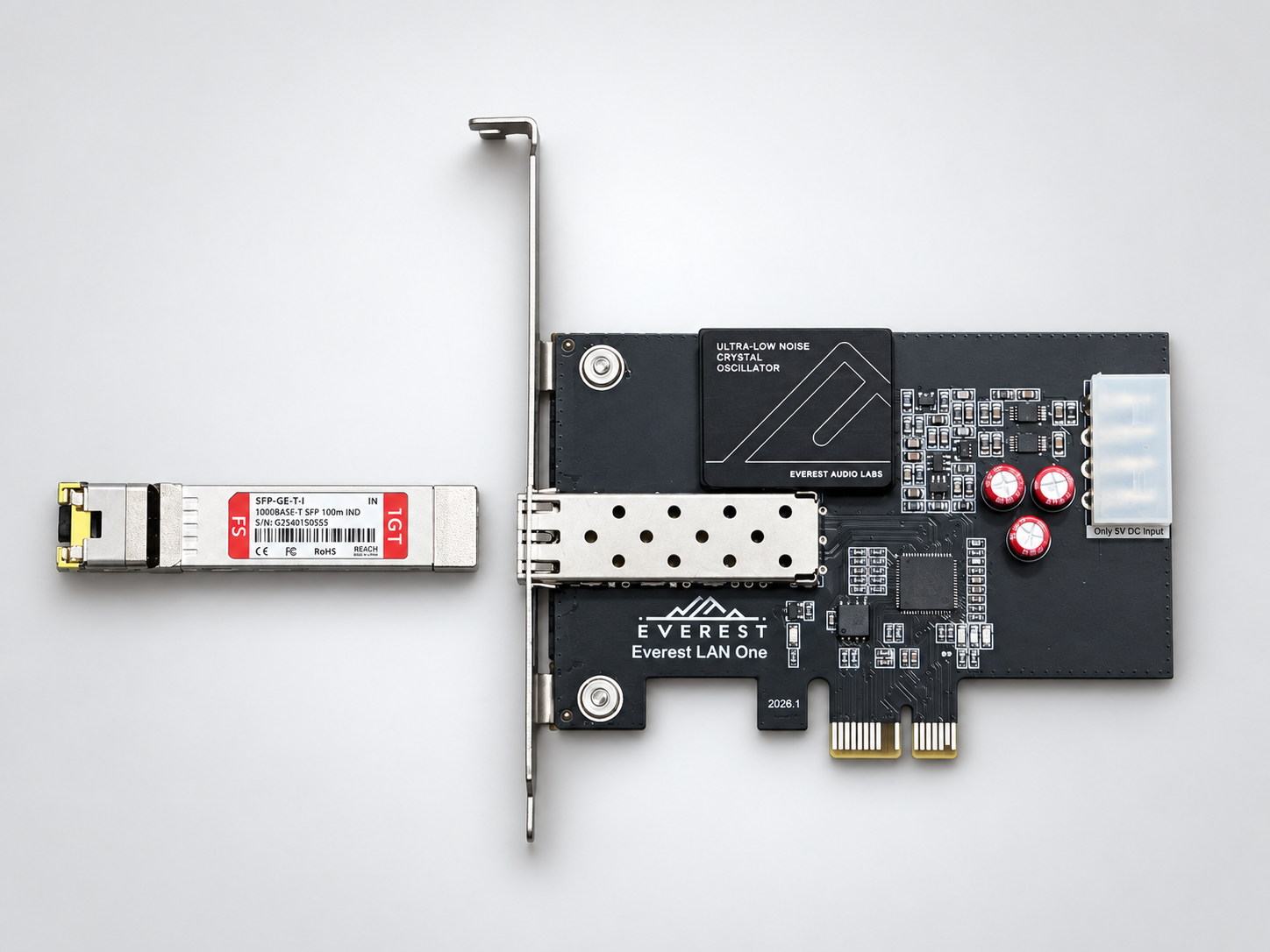
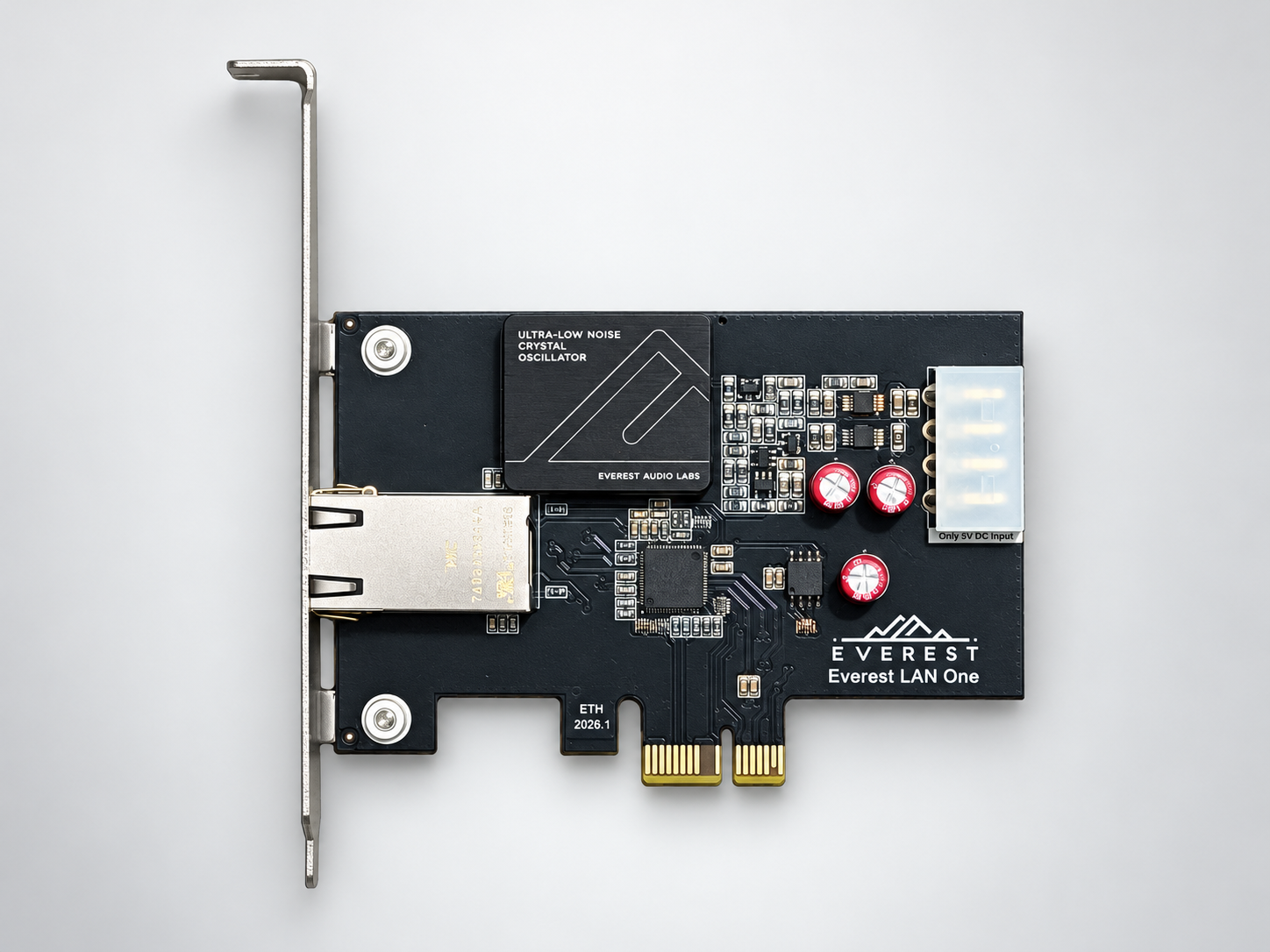
For systems in which the server connects to a DAC or network player over Ethernet, Ascent can be configured with the proprietary Everest LAN One card. It provides an alternative to the USB One configuration for a different connection between the source and the audio system.
The choice of interface allows Ascent to be matched to the receiving component. The server also supports later card replacement and software upgrades, providing scope to adapt the source as the audio system changes and the platform develops.
Debut demonstrations in three systems at Audio Video Show
The latest Ascent will be demonstrated at Audio Video Show in Warsaw on 23–25 October 2026. It will play in three systems, giving visitors the opportunity to hear it in different equipment combinations.
PGE Narodowy stadium, Paryż A room — a system featuring VTL electronics and Lirogon loudspeakers.
Radisson Blu Sobieski Hotel, room 306 — the BonaWatt demonstration.
Radisson Blu Sobieski Hotel, room 327 — the ADMD/Audiotite demonstration.
Pricing and availability
Everest Ascent with the Everest USB One card is priced at EUR 8,000 including VAT. USB One is also available separately at EUR 800 including VAT. Both products are available now, with a standard lead time of three weeks.
Products are sold directly worldwide and through dealers. Ascent and USB One carry a 24-month manufacturer’s warranty. Details of the LAN One configuration and other options are available from Everest Audio Labs or its dealers.
About Everest Audio Labs
Everest Audio Labs is a Polish manufacturer of music servers and PCIe cards for high-end audio systems. The company develops proprietary power supply and digital interface designs, together with software configurations dedicated to music playback.
Owner Adam Mokrzycki has worked in the audio industry for more than 30 years. He began in 1994 as a reviewer for Audio Video magazine and later wrote for AUDIO. He has been building music servers for 15 years, including projects for other well-known manufacturers. Everest Audio Labs draws on this experience in the development of its own digital sources and expansion cards.
Press contact
Adam Mokrzycki | Owner of Everest Audio Labs
Email: [email protected]
Product specifications and commercial information
Everest Ascent
|
Item |
Details |
|
Product type |
Music server for high-end audio systems |
|
Platform |
Quad-core Intel CPU and 16 GB low latency RAM |
|
ATX power supply |
Fully linear for every standard ATX voltage rail, 250 VA transformer, 320,000 µF of filtering capacitance and 7 independent linear regulators |
|
USB One included as standard |
Proprietary Everest Audio Labs PCIe interface |
|
USB stage power |
Dedicated linear power supply, separate 60 VA transformer, 29,000 µF of filtering capacitance, 2 supercapacitors of 450 F each and 5 ultra-low-noise LT3045 regulators |
|
Alternative output card |
Everest LAN One for Ethernet connections |
|
Operating system and playback |
Custom AudioLinux with Roon, Roon Bridge, MPD or HQPlayer NAA configurations |
|
Cooling |
Passive and fanless |
|
Upgrade options |
Card replacement and software upgrades |
|
Price with USB One |
EUR 8,000 including VAT |
Everest USB One
|
Item |
Details |
|
Product type |
USB host controller card for a PCIe slot |
|
Clock |
Low phase noise SC-cut crystal oscillator |
|
Voltage regulation |
Ultra-low-noise LT3042 regulators |
|
Power |
5 V DC |
|
Standalone price |
EUR 800 including VAT |
Both products are available now. Standard lead time: 3 weeks. Manufacturer’s warranty: 24 months.