

HDTT continues to release recordings of historical significance that are treasures to hear once again, and all in excellent sound quality. We have five classical recordings that deserve a place in every classical music collection. And three jazz recordings of interest, with the Sonny Stitt and Paul Gonsalves album, Salt and Pepper, beyond outstanding. Enjoy.


Stravinsky Petrouchka (1911 version). Pierre Monteux, Boston Symphony Orchestra. HDTT 1959 2026 (DSD256, DXD*) HERE
I have always preferred the 1911 score of Petrushka. The slimmed-down 1947 version loses too much of the richness of the 1911 original orchestration. My go to performance has always been this Pierre Monteux account with the Boston Symphony from 1959. Monteux brings not only authority to the performance, but also real humanity.
And the recording quality from Orchestra Hall in Boston is sterling. Bob Witrak's transfer from a 4-track tape delivers this recording in some of the best sonics I've yet heard across many different issues of this recording. It is gorgeously vibrant and transparent. The soundstage and instrumental detail are nigh on perfect. The dynamic range is immense, and the transient impact is as sharp and crisp and overwhelming as one might ask to hear. Overall, this early stereo account competes with the best recordings of this work in my library—and I have many.
If you want to hear this music in one of the best performances ever recorded, get this. If you want to hear this recording in the best sound quality of any of its various incarnations, get this.
And before you ask, yes I prefer this release to the SACD. The SACD sounds processed, blunted, too smooth—it is prettified—not what this music should sound like.

The French Touch, Charles Munch, Boston Symphony Orchestra. HDTT 1957 2026 (DSD256, DXD*) HERE
For decades, this album has been an audiophile top-of-the-pile recommendation and reference. Each of the works included is a definitive performance:
Dukas: The Sorcerer's Apprentice
Saint-Saëns: Omphale's Spinning Wheel
Ravel: Mother Goose
Charles Munch and his Bostonians are playing at the top of their game here. And the Lewis Layton engineered recording just nails the sonics.
For some reason, this album has never been reissued and reissued. There is a CD available in the Charles Munch RCA box set. But the audiophile reissue specialists have just not latched onto this recording to give us the sound quality deserved.
Fortunately, the original Living Stereo Shaded Dog LP always sounded superb. And that is what we hear in this release. Bob Witrak has transferred this from a 1/S 1/S original pressing with all of it's tubey magic and silky glory.
If you came to audio without hearing these original RCA Living Stereo Shaded Dog LPs, here is your opportunity to hear what all the fuss has been about over these many years. Bob has captured it, put it in a bottle, and delivered it to our doorsteps.
A truly special addition to the growing Vinyl Records Restoration series. My highest recommendation!

Salt And Pepper, Sonny Stitt and Paul Gonsalves. HDTT 1963 2026 (DSD256, DXD*) HERE
Salt and Pepper is a classic jazz album featuring an inspired matchup between two tenor saxophone masters—Sonny Stitt and Paul Gonsalves—recorded on September 5, 1963 by Rudy Van Gelder in his New Jersey studio and released in 1964 on Impulse! Records.
It is a spirited, straight-ahead jazz session built around the chemistry and contrast between these two formidable players. Not simply a blowing session, this album has both Stitt and Gonsalves engaged in direct, high-energy musical conversation as they trade solos and interplay over a rhythm section anchored by Hank Jones (piano), Milt Hinton (bass), and Osie Johnson (drums).
A highlight of the album is their rendition of "Stardust" (track 5). Stitt switches to alto saxophone creating a distinctive contrast with Gonsalves's warm tenor lead and showcasing the versatile expressive range of both players. Overall, Salt and Pepper stands as an engaging and energetic example of 1960s mainstream jazz, recommended especially for fans of straight-ahead jazz and saxophone.
This transfer is from an Impulse! original pressing. Evidencing yet again the excellence Bob Witrak is achieving with this Viny Records Restoration series, the sound is clear, highly detailed, and warmly resonant.

Benjamin Britten, Four Sea Interludes, The Young Person's Guide To The Orchestra, Carlo Maria Giulini, The Philharmonia Orchesta. HDTT 1962 2026 (DSD256, DXD*) HERE
My touchstone for both of these works has always been the Decca recording with Benjamin Britten conducting. Hearing the Giulini make his traversal in the same hall (Kingsway) with EMI offers a distinctly different interpretive and expressive experience.
Listening to Britten's interpretation of Four Sea Interludes is to hear the suite clearly within context of the broader Peter Grimes opera from which it comes. For Britten, these are vivid sections within the larger drama of Peter Grimes, with pacing and phrasing underscoring psychological drama inherently tied to the opera's narrative. They are compelling as dramatic miniatures. (Britten's recording HERE.)
In contrast, Giulini tends to emphasize orchestral warmth and shaping. His Sea Interludes have a more sustained, reflective character, with orchestral colors blended in a way that is more "lyrical" or "classically balanced" than Britten's own reading. Giulini was first and foremost a symphonic musician, his recording plays the suite like standalone orchestral tone poems rather than as embedded elements of opera drama.
The EMI recording similarly contrasts with typical Decca sound provided to Britten. With the Giulini recording, the sound quality is that of the classic EMI recording aesthetic: spacious, coherent, unforced, and just a bit distant, allowing the natural acoustics of the recording environment to dominate.
As HDTT describes, "Where Britten favored immediacy and analytical clarity, Giulini pursued long-range continuity, tonal blend, and structural breadth." And their respective recording labels, producers, and engineers could not be more fully aligned to these contrasting interpretive views—there is a perfect synergy.
Long considered one of the great historical performances, Giulini's performance is completely convincing, utterly compelling. It is fascinating to hear and to contrast with the composer's own.
I've focused on Four Sea Interludes, but similar interpretive differences hold true with The Young Person's Guide To The Orchestra. (Britten's recording HERE.)
This contrast is, for me, one of the endlessly fascinating aspects of classical music—the same music interpreted and performed so differently, each with great authority and impact, each fully engaging and rewarding.

Venice, Georg Solti conducts the Orchestra Of The Royal Opera House, Covent Garden. HDTT 1958 2026 (DSD256, DXD*) HERE
This is another example of the very fine RCA Living Stereo records recorded by Decca engineer Kenneth Wilkinson. It has always been one of the most respected Living Stereo releases. Many classical record labels at this time were releasing some form of "ballet music for the opera" records. This was one of the better ones.
As an indicator of how well RCA thought of the Venice release, it originally came as a Soria Series release with in a special gatefold cover with an internal booklet describing Venice and the music contained on the LP—with beautiful classic photos of the city, making for a very nice album presentation.
The music on this Venice album is not boring and has a nice variety of more lyrical (e.g. Offenbach's Barcarolle) and more dynamic works (e.g. Rossini's Semiramide Overture). The ravishing string tone is among the best of a Living Stereo, and the orchestral balance and hall ambience are excellent.
Verdi: La Traviata: Preludes to Acts I and III
Rossini: Semiramide: Overture
Offenbach: The Tales of Hoffmann: Barcarolle
Rossini: L'Italiana in Algeri: Overture
Ponchielli: La Gioconda: Dance of the Hours
This is another welcome entry in HDTT's Vinyl Record Restoration series, sourced from an RCA Living Stereo 1/S 1/S original pressing. I'm delighted to have it in my digital collection. There is some audible distortion in The Tales of Hoffmann: Barcarolle (track 4, the final cut on side one, last two minutes or so) and some wavering distortion at dynamic peaks in track 5 (side two's opener). None of this will surprise anyone who lived with vinyl for decades—a gentle reminder that the format always had its compromises. Still, these are minor blemishes on a recording of such distinction and historical importance. I'm very glad to have it preserved in otherwise excellent sound. Thank you, Bob Witrak.
Venice has long been justly celebrated for its immense soundstage and three-dimensional imaging. Kenneth Wilkinson captures the lush acoustics of Kingsway Hall while preserving the bite of the brass and the shimmering detail of the strings. The engineering is masterful. And it is an excellent example of just why Kenneth Wilkinson is legendary.
RCA would release in the next year an even greater collection of ballet music, LDS 6065 The Royal Ballet Gala Performances with Ernst Ansermet, which also boasted outstanding, perhaps even superior, sonics. Also recorded in Kingsway Hall by Kenneth Wilkinson, the comparison is fascinating and the music is very different: ballet music from Tchaikovsky, Respighi, Delibes, Adam, and Chopin. It is available from HDTT in two volumes transferred from 15ips tape: Part 1 HERE and Part 2 HERE.
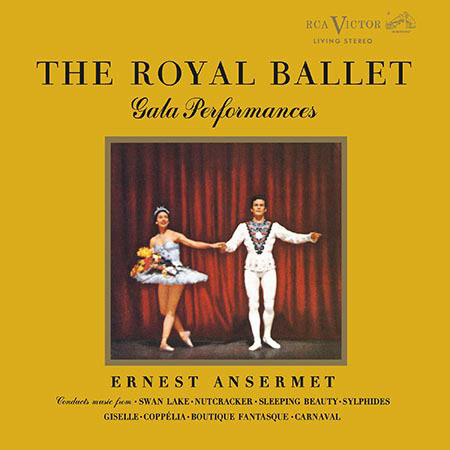
Original RCA cover for The Royal Ballet Gala Performances.
For more information this Royal Ballet Gala Performances release, see the review contained in my November 2020 article about Kenneth Wilkinson HERE.

Jimmy Smith Plays Fats Waller. HDTT 1962 2026 (DSD256, DXD*) HERE
This album stands as both a tribute to Fats Waller, a stride pianist and composer from the earlier swing era, and a reinvention. It is a reminder that jazz tradition isn't static but continuously reinterpreted through new instrumental voices.
At the time of its 1962 release on Blue Note Records, Jimmy Smith was already the dominant voice of the Hammond B-3 in modern jazz. With his reinterpretation of the music of Fats Waller, Smith created a bridge between 1930's Harlem piano tradition and 1960s soul-jazz. Rather than treating Waller's repertoire as nostalgic museum pieces, Smith reimagines them in a groove-centered, blues-inflected language. It's not revivalism; it's transformation.
The album features Jimmy Smith on Hammond organ, Quentin Warren on guitar, and Donald Bailey on drums. Without a piano in the ensemble, Smith uses the organ to supply melody, harmony, and bass simultaneously.
Recorded by Rudy Van Gelder in his studio, the sound demonstrates clean engineering and instrumental separation to provide the clarity needed to capture the sound of the organ. This is a very open and transparent transfer from an original Blue Note pressing. Another excellent release in the ongoing Vinyl Record Restoration series from HDTT.
I admit to not being all that fond of the Hammond organ sound, but this album captured my interest. It certainly opened my ears to the creative abilities of Jimmy Smith. If you're already a fan, you'll want to add this release to your digital collection. If you're not sure, this would be an excellent introduction to learn more.

Henry Mancini, Mr. Lucky Goes Latin. HDTT 1961 2026 (DSD256, DXD*) HERE
Mr. Lucky Goes Latin is one of those early-1960s crossover albums that captures arranger-composer Henry Mancini at the height of his pop-orchestral powers: sleek, urbane, and rhythmically infectious.
Released in 1961 on RCA Living Stereo, the album takes the theme from the television series Mr. Lucky and reimagines it through a Latin-tinged lens. But this is not authentic Latin jazz. It is period Hollywood kitsch, with enough mambo, cha-cha, bolero, and samba rhythms to pretend. At the same time, it is sharply tailored, rhythmic, and immaculately arranged, with an orchestra composed of top-tier Hollywood studio musicians, including such notables as Shelly Manne, Laurindo Almeida, Ronny Lang, and Ted Nash. I keep vacillating between loathing it and having fun with it.
Artists:
Conductor – Henry Mancini
Concertmaster – Erno Neufeld
Baritone Saxophone [Baritone Horn] – Ted Nash
French Horn – Vince DeRosa
Mandoguitar [Guitars And Mandolins] – Bob Bain, Laurindo Almeida
Organ [Hammond Organ] – Bobby Hammack
Percussion [Percussionist] – Frank Flynn, Larry Bunker, Milt Holland, Shelly Manne
Piano [Tinpañola] – Jimmy Rowles
Reeds – Ronny Lang
If you enjoy Henry Mancini, you probably need to have this in your collection. It's not Peter Gunn or Hatari, but it does show off Mancini's unique abilities and sound aesthetic. And it is released here in as good or better sound quality as you will ever find it. Transferred from a 4-track tape, the sound is immediate, crisply detailed, and very dynamic.
All in all, this is a fun addition to my Mancini library and I'm pleased to have it available when I'm in the mood.

Bruckner Symphony No.7, Otto Klemperer, Philharmonia Orchestra. HDTT 1960 2026 (DSD256, DXD*) HERE
This is one of the most monumental and architecturally conceived readings of Anton Bruckner's Seventh Symphony on record. I have a love/hate relationship with the recordings Klemperer made, but his recordings of Bruckner pull me in, simply enthrall me, every time I listen. In his hands, Bruckner simply makes sense—this performance of the Seventh in particular.
Recorded for EMI in the early 1960s (Kingsway Hall, London), it reflects Klemperer's late style: broad tempos, massive structural control, and a refusal to sentimentalize Bruckner's spirituality. These are characteristics I truly love in Klemperer's approach to Bruckner. As frustratingly slow as his tempi can be in other music, here his approach is just perfect for me—massively implacable, unstoppable, completely under control. No fluff, no hand-wringing.
Klemperer treats the Seventh not as mystical vapor but as granite architecture.
Where some conductors bathe Bruckner in glowing warmth, Klemperer emphasizes structural clarity, rhythmic firmness, orchestral balance, and monumental dignity. The result is austere, but deeply moving. This is one of the great interpretations of the Seventh. Every library of symphonic music should include a copy of this recording.
The Kingsway Hall acoustic provides its characteristic warmth, but without utter clarity of orchestral inner voices and detail. The EMI recording aesthetic is beautifully supportive, allowing the music to bloom with great resonant beauty. Glowing strings, burnished brass, huge dynamics, this album has it all. And all of this is further supported by the warmth of the EMI vinyl, for this is yet another excellent transfer from an original pressing in HDDT's ongoing Vinyl Record Restoration series.
If you have any affinity towards Bruckner's music, get this release. If you've not cared for Bruckner in the past but you enjoy large scale symphonic music, try this recording—it may well open your ears to what there is to enjoy with Bruckner.
* Once again, I am listening to the edit master file which is in DXD—it gives me the best sound quality in my primary audio system with the Playback Designs MPD-8 DAC. In some quarters there is a knee-jerk reaction to listen to the DSD256 resolution on some assumption it will sound superior. But you should compare alternate resolutions in your own playback system. While I vastly prefer Pure DSD256 resolution recordings, I invariably find in my primary system that the edit master, of whatever resolution, will sound best. On the other hand, in Ann's office system with a Teac UD-501 DAC, she prefers DSD256 files over any others because that sounds best in that system.